Xfinity Outage: Lessons in Service Continuity
The Xfinity outage took down TV, internet, and even the support phone line. See what Comcast's failure teaches about not relying on a single channel.
by Cleverson Gouvêa
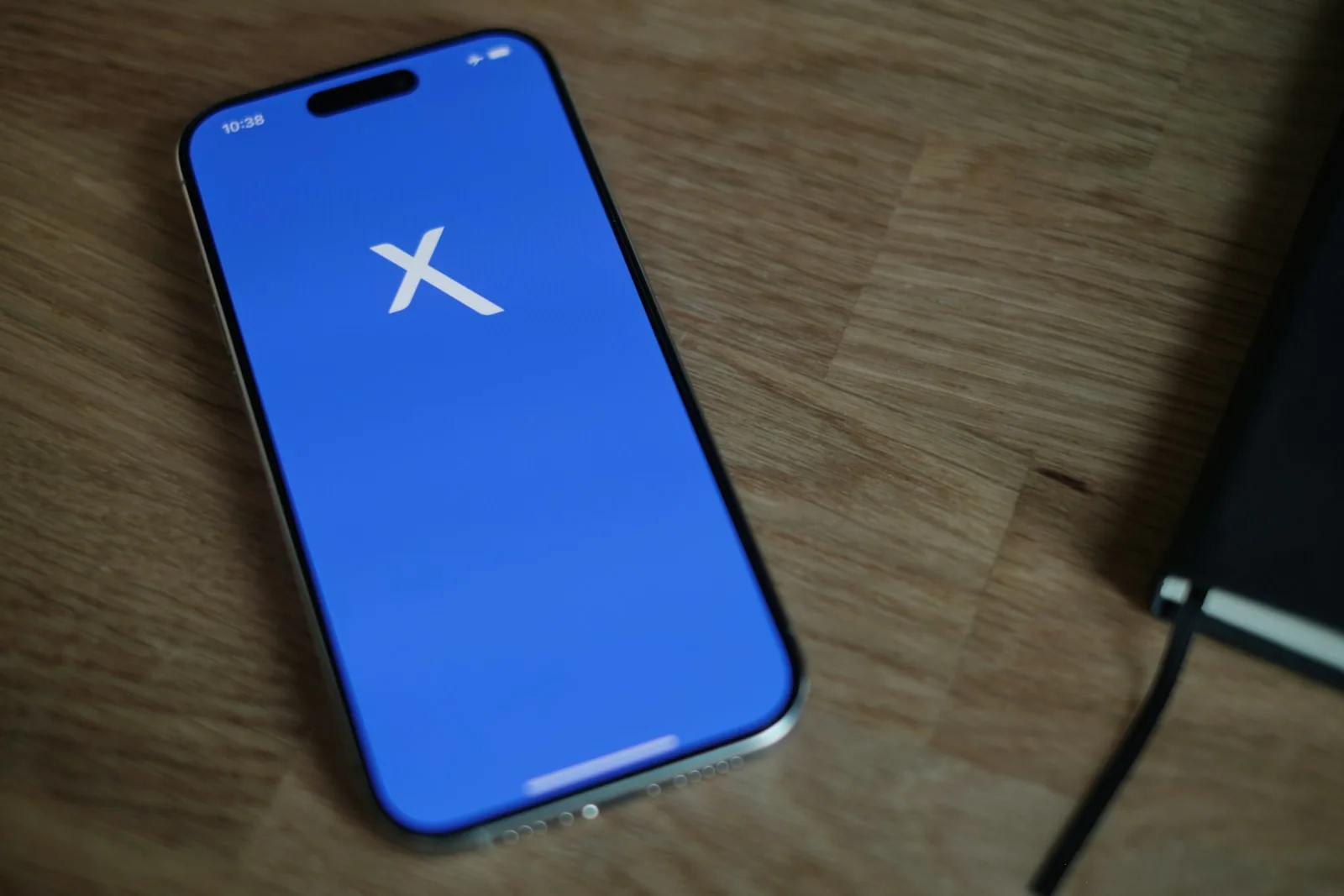
The Xfinity outage on June 22, 2026 left more than 24,000 customers in the United States without TV, internet, and streaming on a Monday afternoon. The detail few commented on: Comcast's own customer service channel also went down. For those running a business that depends on customer communication, this episode is less distant news and more a mirror. Here you'll understand what happened and, most importantly, what to do to avoid the same.
TL;DR
- On 06/22/2026, Xfinity (Comcast) recorded a peak of nearly 26,000 reports on Downdetector, with 77% to 80% of complaints related to TV.
- Comcast attributed the failure to a "system update"; service was restored in about 1 hour and 30 minutes.
- Customers reported that even the support phone line wasn't working — the company went silent during the crisis.
- The key lesson: don't concentrate TV, internet, and customer service on the same point of failure.
- Multichannel service and automation via official API are the insurance against this type of blackout.
What happened during the Xfinity outage
On the afternoon of June 22, 2026, Xfinity users — Comcast's residential services brand — began reporting problems en masse. Around 4:15 PM (Eastern Time), Downdetector already had more than 24,000 reports. Shortly before 4:30 PM, the number peaked at nearly 26,000 simultaneous reports.
The profile of complaints is revealing. About 77% to 80% of complaints were related to TV: frozen screens, infinite loading screens, and error messages. Another 10% to 13% pointed to internet failures, and around 8% complained about streaming services and the app. The outage affected regions across the country — California, Oregon, Florida, Georgia, Colorado, Connecticut, and New Jersey were among the affected areas, with major centers like Seattle, Portland, Chicago, Boston, Houston, and the San Francisco Bay Area on the list.
The good news: the failure was relatively short. Around 5 PM, reports had already dropped to just over 6,400, and the outage dissipated near 6 PM. In a statement, Comcast said there was a "brief service interruption due to a system update, but service was quickly restored." It's worth remembering that Downdetector only captures those who spontaneously report the problem — so the number affected by the Xfinity outage was, in practice, much larger than the reports suggest.
Why a "system update" brought everything down
When a company the size of Comcast says a system update caused the interruption, it's describing a classic single point of failure: a central component whose failure drags everything else down with it.
In large, legacy architectures, it's common for TV, internet, and even telephony to travel over the same network backbone. A poorly calibrated update — a routing configuration, a certificate, a firmware deploy — propagates the error to all services at once. It wasn't an attack, it wasn't a natural disaster: it was an internal change that got out of control. And it's precisely this type of failure that scares the most, because it's self-inflicted and, in theory, avoidable.
The technical lesson is straightforward. Redundancy isn't a luxury for giants; it's basic hygiene for any operation that depends on technology to talk to the customer. Those who put all their eggs in one basket — the same provider, the same channel, the same infrastructure — become hostages to a single poorly tested line of code. The Xfinity outage is a reminder that even companies with billions in revenue and top engineering teams stumble on their own deployment process.
The detail no one commented on: customer service also went down
Here's the point that interests us most. During the Xfinity outage, several customers reported that they couldn't even call support. One user summed it up: "the customer service number is also down."
Think about the cascade effect. The service goes down, the customer gets anxious, tries the app — which is also down — tries the phone — which is also silent. The technical frustration turns into brand frustration. And in these moments, the company's silence costs more than the failure itself.
At Agathas Web, after years of managing critical environments and service channels, we've learned a simple rule: the channel you use to announce the crisis cannot be the same one that is in crisis. If your internet is down and your only contact with the customer depends on that same internet, you've become invisible precisely when you most need to be visible.
What the Xfinity outage teaches Brazilian companies
You may not operate a national cable TV network, but the logic is the same for a clinic, an e-commerce, a school, or an agency. Let's get to the practical lessons.
Don't rely on a single channel
If all your customer service goes through one phone number, or only through one WhatsApp, or only through a chat on your site, you have a single point of failure. When that channel goes down — due to blocking, instability, or configuration error — your company becomes unreachable. Distributing service across WhatsApp, email, social media, and phone drastically reduces risk. We've already covered this when WhatsApp Web went down and showed what to do: contingency is not improvised in the middle of a fire.
Have a crisis communication plan
Comcast took hours to make a clear statement. In your business, response time should be measured in minutes. Have a standard text ready ("we are experiencing instability, we are already resolving it, we will return in X"), define who publishes and where, and use an alternative channel — a status page, a story, a mass email. The customer forgives the failure; they do not forgive abandonment.
Treat customer service as infrastructure, not as cost
Many companies invest heavily in the product and leave customer service in the hands of a single employee with a personal cell phone. When that cell phone freezes, or that employee leaves, the operation stops. Customer service is critical infrastructure and deserves the same redundancy you would give a server.
Service continuity in practice
Resilience is not an abstract concept — it's a series of concrete architectural choices. The table below compares the fragile scenario (which the Xfinity outage exposed) with the resilient scenario we recommend:
| Aspect | Fragile scenario | Resilient scenario |
|---|---|---|
| Service channels | Only one (phone OR WhatsApp) | Integrated multichannel |
| Infrastructure dependency | Everything on the same provider | Diverse providers and routes |
| When the channel goes down | Customer gets no response | Routing to backup channel |
| Crisis communication | Reactive, slow, manual | Proactive, automated, with status |
| WhatsApp number | Personal, no backup | Official, with API and fallback |
| Conversation history | Stuck on one device | Centralized in the cloud |
The point of the right column is not "having more tools." It's ensuring that the failure of one component does not bring down the entire service. When conversation history lives in the cloud and not on a salesperson's device, switching channels becomes a matter of seconds — not starting from scratch.
Resilience checklist for your customer service
Use this list as a quick diagnosis. The more items you check, the more prepared you are for your own "Xfinity day":
- You have at least two active service channels (e.g., WhatsApp + email) and the customer knows both exist.
- The company's WhatsApp number is official and not tied to a personal device, preventing the loss of the phone from meaning loss of customers.
- Conversation history is centralized, accessible by more than one person, and outside a single device.
- There is a pre-approved crisis message that can be sent out in minutes.
- There is a status page or channel independent of your main infrastructure.
- You test the plan — a simulated blackout per quarter reveals more than ten meetings.
- The most common responses are automated, so the human team can focus on sensitive cases during peak times.
If you got stuck on the first item, you're not alone. Most small and medium-sized Brazilian companies operate exactly like this — and discover the problem the hard way, on the day the channel goes down.
How much does an hour of silence cost
It's tempting to look at the Xfinity outage and think "it was only an hour and a half." But the cost of an interruption rarely fits on a clock. It accumulates on three fronts.
The first is immediate revenue: each minute without service during a demand peak is a sale that doesn't happen, a cart that doesn't close, a quote the customer will ask from a competitor. The second is reputation cost: on social media, frustration becomes a screenshot, and the screenshot becomes a trend. The Xfinity outage made national headlines in just a few hours precisely because angry customers made the problem public faster than the company could respond.
The third front, the quietest, is trust. A customer who can't reach you at a critical moment learns a lesson: you can't count on this company. Rebuilding that perception costs much more than preventing the failure. That's why we treat continuity not as an IT item, but as a relationship pillar.
The role of automation and the official API
This is where technology stops being part of the problem and becomes part of the solution. A service built on the official WhatsApp API gains something a personal device never will: continuity. The number is not tied to a SIM card, conversations live in the cloud, and the operation does not depend on a single logged-in human.
Automation plays two roles during a crisis. First, it responds immediately — even at 2 AM, even during a peak of a thousand messages — informing the customer that they have been heard. Second, it filters and prioritizes, forwarding only what truly requires a human to the human team. It was with this in mind that we structured Voyia with unlimited agents, without charging per employee: in a demand peak, you cannot be limited by the number of licenses.
There's also the security alert. Relying on a regular WhatsApp increases the risk of blocking precisely at times of high volume — exactly when you can't disappear. We've already explained why, in many scenarios, the official API is the safest way out against blocks. Continuity and compliance go hand in hand.
Conclusion: others' blackout is your rehearsal
The Xfinity outage lasted about an hour and a half and was resolved. Comcast has the resources to absorb the impact. Most companies don't. For a smaller business, an hour of silence in customer service during a demand peak can mean lost sales and customers migrating to a competitor that responded.
The good news is that resilience doesn't require a giant's budget — it requires intention. Start with the checklist above, identify your single point of failure, and attack it first. If you'd like to talk about how to set up a multichannel service that doesn't go down with your internet, that's exactly the kind of problem we help solve at Agathas Web. The best time to build your continuity plan is before you need it.
Related posts
Automate WhatsApp Customer Service with AI Without Getting Banned
Meta tried to block third-party AI, a Brazilian regulator halted the rule, and messaging costs start in October. Here's what changes for your automation.

Service During Strikes: Continuity with AI in 2026
Strikes by doctors, teachers, and transport workers halt businesses. See how to keep service running with WhatsApp automation and AI agents.
Nubank Closure Message: Understand the Error
About 20,000 customers received a notice that Nubank had been liquidated. It was false. See what happened and what it teaches.