T-Mobile Fiber Outage 2026: The Triad Blackout and the Lesson
T-Mobile Fiber outage hit the Triad on 05/28/2026. What happened, possible causes, and how your company can protect itself.
by Cleverson Gouvêa
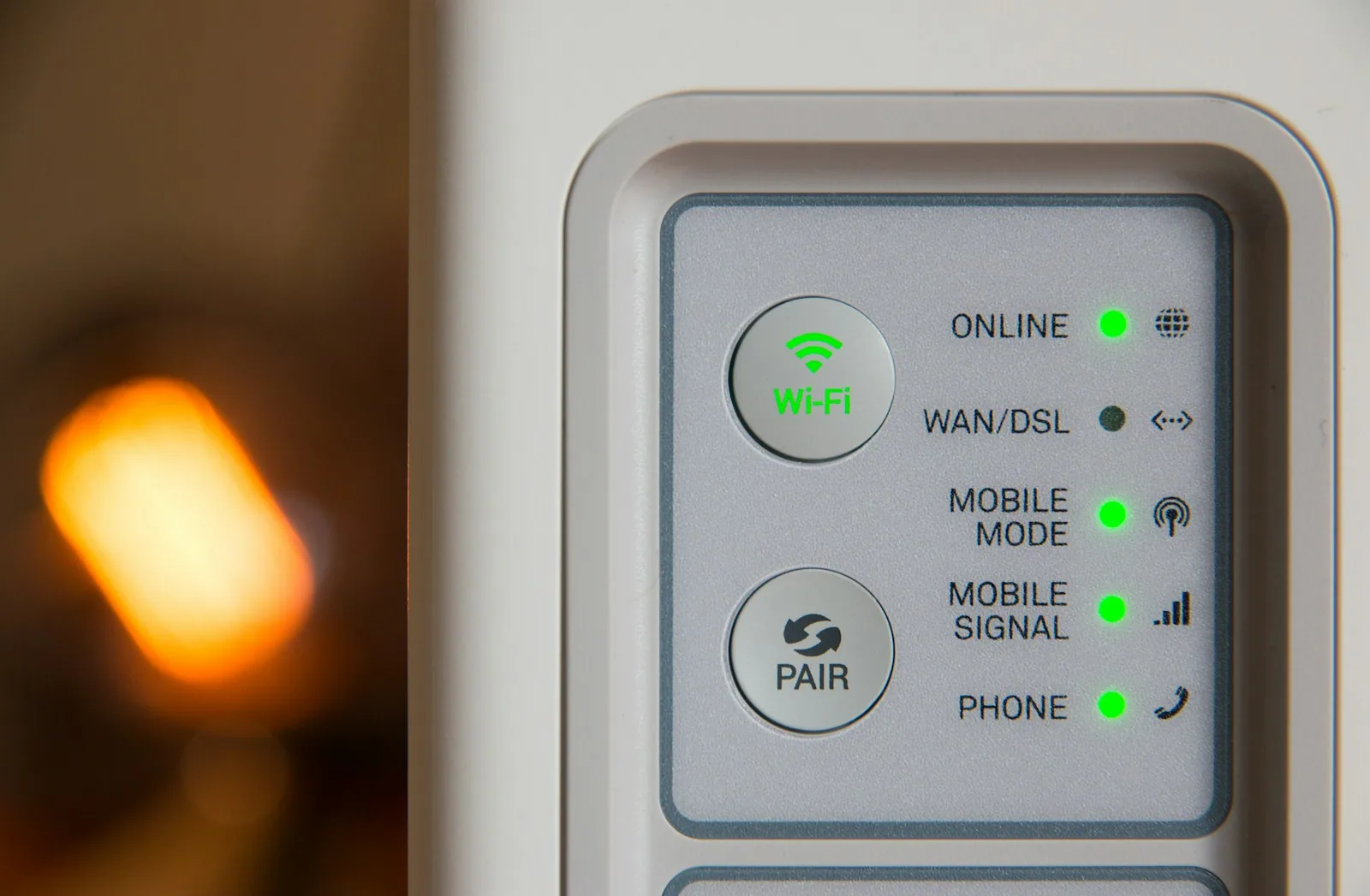
The T-Mobile Fiber outage became a nightmare in the early hours of May 28, 2026 for subscribers in North Carolina's Triad and other US regions. Behind the outage: a $2 billion joint venture with EQT, the Lumos brand swallowed by T-Mobile, and virtually nonexistent communication. In this guide, I show what happened, possible causes, and what your company can learn to avoid falling too.
TL;DR
- Hundreds of reports spiked at 1 AM ET on 05/28/2026 as the T-Mobile Fiber outage hit residential fiber service in several states.
- The most critical focus was North Carolina's Triad (Thomasville, High Point, and Greensboro), the region where the former Lumos operates the infrastructure.
- T-Mobile inherited Lumos via a $2 billion joint venture with EQT, closed on April 1, 2025 — since then, the brand became T-Mobile Fiber.
- Users report total lack of communication: the T-Life app "useless", support closed, and only a recorded message when calling the center.
- For Brazilian companies, this case is a warning: a single link is technical debt. Provider redundancy, active monitoring, and a contingency plan are no longer luxuries.
What happened in the T-Mobile Fiber outage of May 28
Around 1 AM Eastern Time, T-Mobile's residential fiber optic internet service began showing an atypical wave of reports on Downdetector and monitoring sites like IsDown and HighSpeedInternet. Within minutes, the number of complaints jumped to hundreds, and throughout the night, the picture became clear: the T-Mobile Fiber outage was large-scale, with the epicenter in the Triad region of North Carolina, but with perceptible waves in other markets where the carrier sells residential fiber.
Some reports described a complete lack of internet connection. Others, more insidiously, mentioned "missing links" to specific services — particularly Google and YouTube domains — while the rest of the traffic remained partially accessible. This pattern, far from random, immediately raises the hypothesis of a routing (BGP) or DNS resolution problem within the T-Mobile Fiber backbone, rather than a simple equipment failure.
As pointed out by Tom's Guide's report, the official silence further fueled the confusion: customers had to discover the service status through unofficial channels.
Lumos became T-Mobile Fiber — why this merger matters
To place the T-Mobile Fiber outage in the right context, it's necessary to remember how this network ended up in the hands of the "Un-carrier". Most of those affected don't even see the name "T-Mobile" on their invoice — they still associate the service with Lumos, a historic fiber optic brand from the US interior.
On April 25, 2024, T-Mobile and the EQT Infrastructure VI fund announced a $2 billion joint venture to acquire Lumos. Each party contributed about $1 billion, totaling T-Mobile's first significant residential fiber footprint. The deal closed on April 1, 2025, with the carrier holding 50% control and EQT the other 50%. From then on, the brand became T-Mobile Fiber, but the field operations, fiber pairs, and much of the staff continue running as the former Lumos.
Lumos, in turn, inherited assets from NorthState, a regional provider that in 2022 began expanding fiber to about 48,000 homes in Greensboro, High Point, Oak Ridge, Randleman, Kernersville, and Walkertown. In other words, the infrastructure was designed by three different brands over five years. Every such merger usually carries hidden technical debt — mixed vendor equipment, legacy routes, adapted provisioning scripts — and this debt tends to charge interest at the worst times. The blackout on the 28th was possibly one of those interest payments.
The Triad effect: Thomasville, High Point, and Greensboro in the dark
The T-Mobile Fiber outage hit hardest the region known as the Triad — composed of Greensboro, Winston-Salem, and High Point — which became the epicenter of the incident. According to station WFMY, the carrier acknowledged the problem in a statement specific to Thomasville and High Point, stating that "engineers are working to resolve it as quickly as possible."
Who really felt it
The profile of residential fiber customers in this region is a broad cross-section: families who abandoned cable TV in the last five years, small home offices, freelancers, and bootstrap startups that bet on symmetric gigabit fiber at an unbeatable price compared to coaxial cables. These are exactly the profiles that suffer most in blackouts because:
- They don't have a corporate contract with a written SLA.
- They trust a single provider for voice, video, and work.
- They don't maintain a backup link — often because "it never went down before."
When the fiber goes down, remote work goes down too. Google Meet meetings — coincidentally one of the services reported as inaccessible during the incident window — turn into black screen prints.
The second silent blackout: nonexistent communication
The dark side of the T-Mobile Fiber outage wasn't just the outage itself — it was the silence. Several reports compiled by PhoneArena and official T-Mobile forums describe the same pattern:
- The T-Life app, T-Mobile's official app, did not display residential service status.
- The page
t-mobile.com/support/coverage/network-outageswas slow to register the incident. - The human support channel was closed, and calls went straight to an automated message simply stating there was a problem in the Triad.
- No proactive SMS. No email. No push notification.
No metric of "noise on social media" replaces clear communication. The customer who called 1-800 and heard the recording only wanted three things:
- To know that the company knows about the problem.
- To receive a realistic ETA (even if vague: "hours, not minutes").
- To understand if it's worth setting up a Plan B (5G hotspot, mobile data, neighbor).
Large companies forget that customers give a chance when treated with transparency — but quickly lose patience with silence. Brazil experienced a version of this same pattern when WhatsApp Web went down and no one understood why: I told that story in the post WhatsApp Web Down: What to Do and How to Protect Yourself.
What (probably) caused the T-Mobile Fiber outage
As of this post's publication, T-Mobile has not released an official root cause. Out of respect for technical journalism standards, I won't make things up — but I can list reasonable hypotheses based on classic fiber network incident patterns:
Likely hypotheses
- Physical fiber cut: common in urban construction and has a clear signature — contiguous region affected, slow recovery.
- Aggregation router/switch failure: consistent with concentrated regional outage (Triad).
- BGP configuration error: would explain why part of the traffic (Google/YouTube) went down while other sites worked — incorrect prefix announcements or accidental withdrawal.
- Provider recursive DNS failure: customers who saw "some sites loaded, others didn't" described a classic symptom of broken DNS.
- Nighttime maintenance that escaped the window: 1 AM is a typical change window time — a planned change that escalated.
The strongest clue comes from the detail that specific services (Google/YouTube) went down for some users, while other domains responded. This points more strongly to the BGP + DNS pair, and less to a physical cut. In any scenario, the lesson is the same: complex networks fail due to software, not lack of cable.
How providers typically respond to outages — a comparison
Compared to other recent incidents, the T-Mobile Fiber outage this week stands out mainly for its slow communication. The table below places the carrier alongside major Brazilian providers to help calibrate expectations:
| Provider | Public status page | Average notice time | Proactive communication | Comment |
|---|---|---|---|---|
| T-Mobile Fiber (USA) | Yes, but delayed on 05/28/2026 | A few hours | Recorded message on 1-800 | T-Life app didn't show residential status |
| Vivo Fibra (BR) | Yes, with city map | Variable | SMS + Meu Vivo app | Reasonable transparency history |
| Claro Net (BR) | Yes, within the app | Variable | Push and SMS | Usually acknowledges regional issues |
| TIM Live (BR) | Limited | Slower | Little proactivity | Smaller fiber coverage |
| Regional providers (BR) | Rare | Slow | Usually via WhatsApp | Word of mouth in neighborhood groups |
The table makes it clear that the communication bar is not a matter of size — Brazilian regional providers that notify customers via WhatsApp build more trust than a multinational that hides the incident behind a phone menu.
Lessons for Brazilian companies: redundancy is not a luxury
The T-Mobile Fiber outage happens 7,000 kilometers away, but the lesson has a ZIP code in any Brazilian city. Digital operations depend on four pillars: power, link, platform, and people. When one falls, the others must sustain.
In almost 18 years serving clients in critical environments — from institutional Moodle to integrations with the official WhatsApp API — I've seen both small businesses and publicly traded companies fall for the same reason: they trusted a provider that "never failed." That doesn't exist. There are providers that fail more gracefully and that communicate better.
Companies that survive outages with little pain have three things in common:
- A written continuity plan. A short, updated document read by the team.
- An active secondary provider. Not just contracted; it must be configured in real fail-over.
- External monitoring. A third party must notify your company that it's down — you can't rely on the same provider that went down.
For those operating customer service through official channels, this applies doubly. I've already explained the impact in the comparison WhatsApp Business App vs Official API: Which Makes Sense in 2026, where I show why centralizing operations on a single free account is a sure recipe to stop selling when Meta stumbles.
Checklist: how to shield your operation against provider outages
This is the checklist I apply for Agathas Web clients when there is real risk of downtime impacting revenue. It's not exhaustive, but it eliminates 80% of pain in small and medium environments:
Physical infrastructure
- Two fiber links from different carriers (not just two plans from the same carrier — they go down together).
- Router with dual WAN and automatic fail-over.
- UPS sized for modem, router, and core switch (minimum 30 minutes).
- Dedicated corporate 5G chip with its own APN, as an emergency link.
Software layer
- External monitoring (UptimeRobot, Better Stack, Hetrix) checking your site and APIs every minute, from outside your provider.
- DNS with low TTL on critical records, to quickly change destination during an incident.
- CDN/Edge in front of any public site — Cloudflare, Vercel Edge, or similar.
Process
- Continuity document with list of providers, contacts, priority order, and who decides what.
- Proactive communication with the customer: own status page, pre-approved email and WhatsApp template queue.
- Public post-mortem whenever it goes down. Learning is half; showing you learned is the other.
Implementing all ten points costs less than a single full Monday with operations stopped.
Conclusion: double package, peaceful sleep
The T-Mobile Fiber outage of May 28, 2026 has a new side — the Lumos / T-Mobile / EQT merger still digesting — and an old side: poor customer communication during incidents. The old side is cheaper to fix — you just have to want it. The new side takes time and engineering investment.
For the Brazilian reader, the question to ask today is direct: if my provider goes down now, in how many minutes does my operation come back? If the answer is "I don't know" or "it depends on them," you've just discovered your next IT budget priority.
If you want help designing an architecture that withstands provider outages — link, monitoring, fail-over, and continuity plan — that's exactly the kind of project I do at Agathas Web. Start with the checklist above, pick one item from each block, and implement it this week. Those who wait for the blackout to think about redundancy always pay more for the lesson.
Related posts
How Much Does iOS & Android App Development Cost in 2026?
Real-world pricing, factors that increase app costs, new Apple and Google policies for 2026, and annual maintenance budget.
Protecting Your Web Server from Attacks: WAF, fail2ban, and Rate Limiting
94% of logins on the Cloudflare network are bots. Learn how WAF, rate limiting, and fail2ban block attacks before they take down your site.
Linux Server Hardening: Checklist for Web Servers
Is your website running on your own VPS with no dedicated sysadmin? This checklist covers the hardening steps we apply to every inherited server, including common pitfalls that can lock you out.