T-Mobile Dynamic CX: AI on the Network for the 2026 World Cup
T-Mobile US turned on an AI that predicts crowds and adjusts the network before the bottleneck. Understand Dynamic CX and the lesson for your business.
by Cleverson Gouvêa
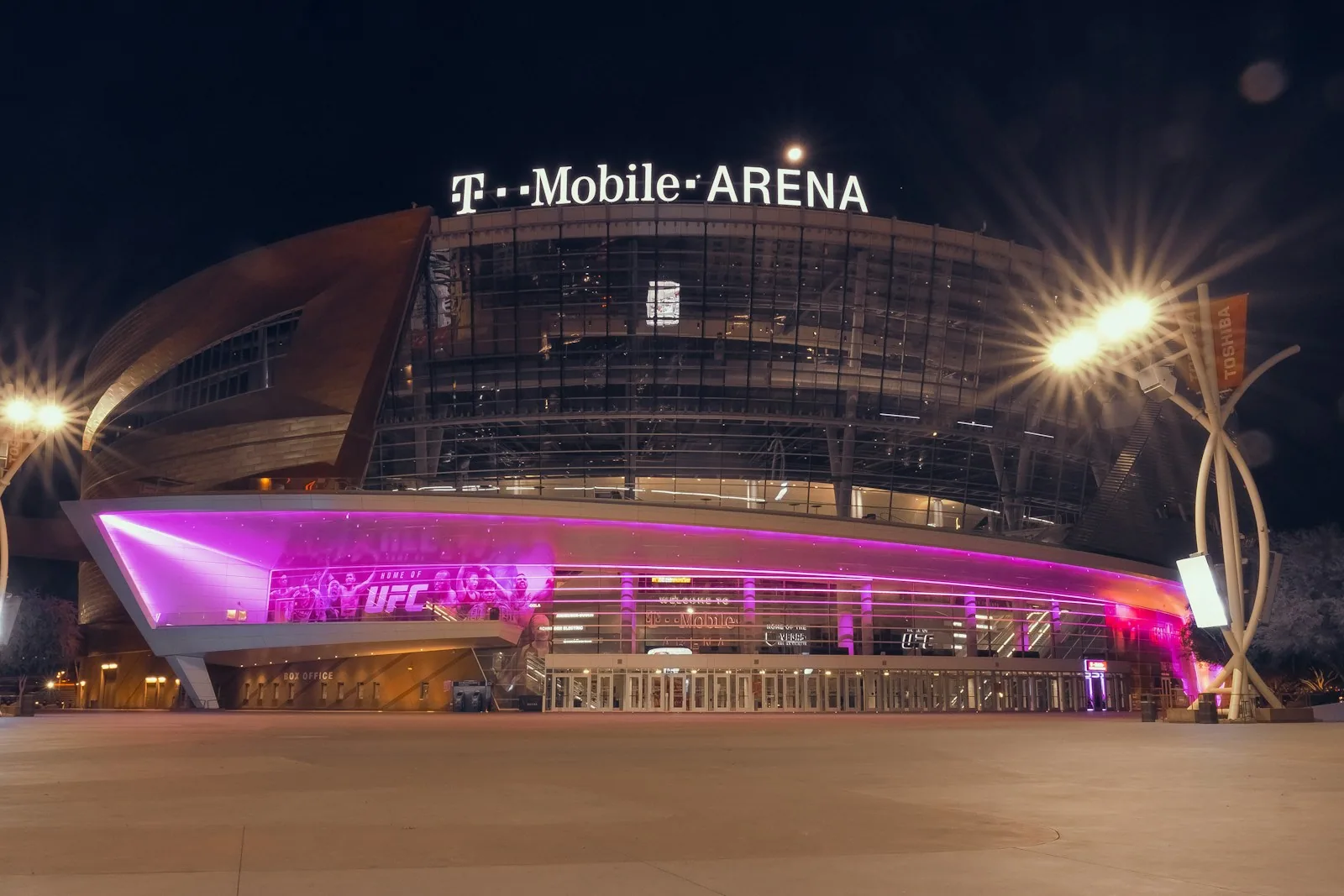
The T-Mobile Dynamic CX is the largest US carrier's answer to a problem every giant event knows: the network that chokes when tens of thousands of people pull out their phones at the same second. Announced on June 4, 2026, it uses artificial intelligence to predict crowds and reorganize the network before the bottleneck appears — and it debuts targeting the 2026 World Cup.
TL;DR
- The T-Mobile Dynamic CX uses AI to predict crowds and optimize the network in near real-time.
- Debuts in the 11 US host cities of the 2026 World Cup.
- It's an evolution of the Self-Organizing Network (SON), which already self-adjusted — now with demand prediction.
- Between February and May 2026, T-Mobile US scored 19 outright wins in Opensignal tests across 11 markets.
- The lesson for businesses: Predictive AI delivers more than reactive automation.
What is T-Mobile Dynamic CX
The acronym CX stands for customer experience. The T-Mobile Dynamic CX is an artificial intelligence layer that monitors the mobile network and automatically adjusts it as demand changes — not after slowdowns happen, but before. The carrier presented the technology on June 4, 2026, positioning it as a centerpiece of preparation for the American summer of big events.
The idea is simple to state and hard to execute: when 70,000 people arrive at a stadium, they all want to stream video, send photos, and open maps at the same time. The antenna's capacity is finite. Without fine-tuning, the experience plummets right at the peak moment. Dynamic CX tries to solve this by anticipating the peak and redistributing network resources to where the crowd will be.
It's worth distinguishing upfront: this is not a new plan or a device. It's orchestration software running on existing infrastructure. The customer installs nothing. The benefit shows up as less freezing at concerts, games, and crowded airports.
How the AI Anticipates the Crowd
The T-Mobile Dynamic CX doesn't start from scratch. It builds on the Self-Organizing Network (SON), the self-managing network technology the carrier already used to monitor and adjust coverage cells continuously. The novelty is the predictive layer on top.
From a network that reacts to a network that predicts
Traditional SON is reactive by nature: it detects congestion and reacts. Dynamic CX reverses the logic. Instead of waiting for traffic to rise, the AI estimates where and when demand will explode and prepares the network in advance. It's the difference between a doorman who opens an extra gate when the line has already doubled and one who opens it before the crowd arrives because he knows the show ends at 11 PM.
What signals the AI reads
According to T-Mobile, the system cross-references public information to identify possible crowds: event calendars, game and show times, and online activity patterns. With this, it maps mass gatherings and directs capacity to stadiums, fan zones, airports, and the transportation network that takes the public to the venue. As the crowd moves, the network reorganizes along with it.
John Saw, CTO of T-Mobile, summarized the background by saying the company has "decades of experience supporting connectivity at some of the world's largest events." Ankur Kapoor, Chief Network Officer, reinforced the focus on keeping people connected "when it matters most." The practical takeaway: the carrier is turning accumulated operational experience into an automated predictive model.
2026 World Cup: The Ultimate Stress Test
No laboratory simulates traffic chaos better than a World Cup. The 2026 Cup takes place in three countries, and the debut of the T-Mobile Dynamic CX covers the 11 US host cities: Atlanta, Boston, Dallas, Houston, Kansas City, Los Angeles, Miami, the New York/New Jersey area, Philadelphia, the San Francisco Bay Area, and Seattle.
For the Brazilian audience, the message is direct: if you're following the national team in the US, the quality of the connection inside and around the stadiums goes through this AI layer. A full stadium is the most hostile scenario for a mobile network — extremely high density of devices in a few square meters, all competing for the same spectrum.
There's also the displacement factor. In a World Cup, the crowd doesn't stay still: it migrates from the hotel to the fan zone, from the fan zone to the stadium, and from the stadium back to public transport in a few hours. A static network doesn't keep up with this flow. The T-Mobile Dynamic CX was designed precisely for this movement, reallocating capacity as the public moves around the city throughout game day.
The carrier doesn't arrive unprepared for this test. Between February and May 2026, T-Mobile US recorded 19 outright wins and 19 shared wins in Opensignal measurements — an independent network analysis firm — covering 11 markets. These numbers matter because they come from real field tests, not internal marketing. It's the kind of external validation that supports the bet on Dynamic CX.
Reactive Network vs. Predictive Network: What Really Changes
The table below separates the classic approach from the T-Mobile Dynamic CX proposal. The difference is not hardware power — it's timing.
| Criteria | Reactive Network (Classic SON) | Predictive Network (Dynamic CX) |
|---|---|---|
| Action trigger | Congestion already detected | Demand predicted before peak |
| Decision source | Real-time metrics | Metrics + public event signals |
| Response window | Seconds after the problem | Minutes to hours before |
| Ideal scenario | Gradual variations | Sudden and mobile crowds |
| Main risk | Customer feels the slowdown first | Prediction error allocates resource in vain |
The key point in the last row: neither is perfect. The reactive one errs by letting the customer feel the pain; the predictive one errs when the prediction fails and capacity goes to the wrong place. Dynamic CX bets that predicting and occasionally erring is better than always reacting late.
What Dynamic CX Teaches About AI in Your Company
Here, the T-Mobile case stops being telecom news and becomes a strategy lesson. The leap the carrier made — from reactive automation to predictive automation — is exactly the leap most Brazilian companies still need to make with AI.
Think about your customer service. Reactive automation responds when the customer has already complained. Predictive automation anticipates the demand peak of a promotional Wednesday and scales the team before the line forms. It's the same philosophy as Dynamic CX, applied to people instead of antennas. Those who work with AI agents in customer service know that real value appears when the system acts before the problem, not after.
The second lesson is about data. T-Mobile's AI only predicts crowds because it reads public signals — calendars, schedules, patterns. Without this data, there is no prediction. This applies to any business: prediction is only as good as the signals you can capture. Before dreaming of predictive AI, it's worth auditing whether the company even records the events that precede its peaks. This is a topic we delve into when analyzing what changes for Brazilian companies with AI.
There's also a direct parallel with the job market. Just as Dynamic CX takes over the micro-management of the network to free engineers from repetitive decisions, AI agents are taking over operational tasks in entire offices — a movement we break down in how AI is reshaping work with autonomous agents.
Third: Predictive AI does not replace infrastructure; it orchestrates it better. T-Mobile didn't swap its antennas — it put a brain on top of them. Companies that expect AI to solve what operations don't usually get frustrated. Dynamic CX works because the underlying physical network was already competitive.
T-Mobile US Doesn't Stop at the Network
Dynamic CX is the technical headline, but T-Mobile US made June 2026 a month of broad offensive. The carrier celebrates 10 years of the T-Mobile Tuesdays program by turning June into the first "Member Month" — a season of benefits for subscribers, from premium drinks on Delta flights to another free year of DashPass and expanded fuel discounts at Shell stations.
In infrastructure, the company pushed fiber expansion investment beyond $9 billion, signaling that the competition is not limited to mobile 5G — it advances into fixed residential internet. The subsidiary Mint Mobile, in turn, reinforced its prepaid plans, increasing data allowances from 5 GB to 6 GB, 15 GB to 17 GB, and 20 GB to 23 GB.
Add to that the role of official sponsor of America250, and the picture becomes clear: the carrier is combining brand engagement, capacity expansion, and network AI in a coordinated move. The T-Mobile Dynamic CX is the most visible tip of a strategy that mixes technology and market positioning.
Where Predictive AI Still Stumbles
Optimism with method. Anticipating demand with AI brings real gains, but it's not magic — and pretending it is only sets up the next disappointment.
The first limit is prediction quality. A model that misestimates the audience can allocate capacity to an empty sector while another fills up. The more unpredictable the event, the greater the margin of error. Spontaneous crowds, without a public calendar, are the natural blind spot of any system that depends on advance signals.
The second is dependence on external data. If the source of schedules or events fails or changes at the last minute, the prediction inherits the error. Predictive automation amplifies both good and bad data.
The third, for companies inspired by the model: don't confuse T-Mobile's case with a ready-made recipe. They have decades of network telemetry to train the models. Those just starting need to first accumulate history before prediction becomes reliable. Predictive AI without data is just a guess dressed up.
Conclusion: The Game Has Changed for Infrastructure Operators
The T-Mobile Dynamic CX marks a concrete turning point: networks that stop merely reacting and start anticipating. For the fan in the US during the 2026 World Cup, this could be the difference between streaming the goal or watching the loading bar. For companies, it's a reminder that the next productivity leap with AI is not in automating what already hurts — it's in predicting the problem before it hurts.
If your operation is still putting out fires instead of preventing them, it's worth starting small: map which signals precede your peaks and record them. It's the first step, the same one T-Mobile took before entrusting the network to an AI. At Agathas Web, that's where we start any intelligent automation project — with data, not hype.
Related posts
Manus AI: The Chinese Agent's 2026 Saga & Lessons for US Businesses
Acquisition blocked by Beijing, two days offline, and data deletion: what the Manus case teaches those who use AI agents.
What Counts as AI in 2026: A U.S. Legal Guide
Is your chatbot AI in the eyes of the law? Three U.S. regulations hinge on that answer—and most companies aren't ready.
Midjourney V8.2: AI Creatives for Ads in 2026
Draft mode, V8.2, commercial license, and the billion-dollar Hollywood lawsuit: the practical Midjourney map for ad creative production.