Volkswagen Connected Cars: 100K in the US and the Arrival of OTTO AI
Less than two years to reach 100,000 connected cars. Understand VW's digital shift and what your business can learn from it.
by Cleverson Gouvêa
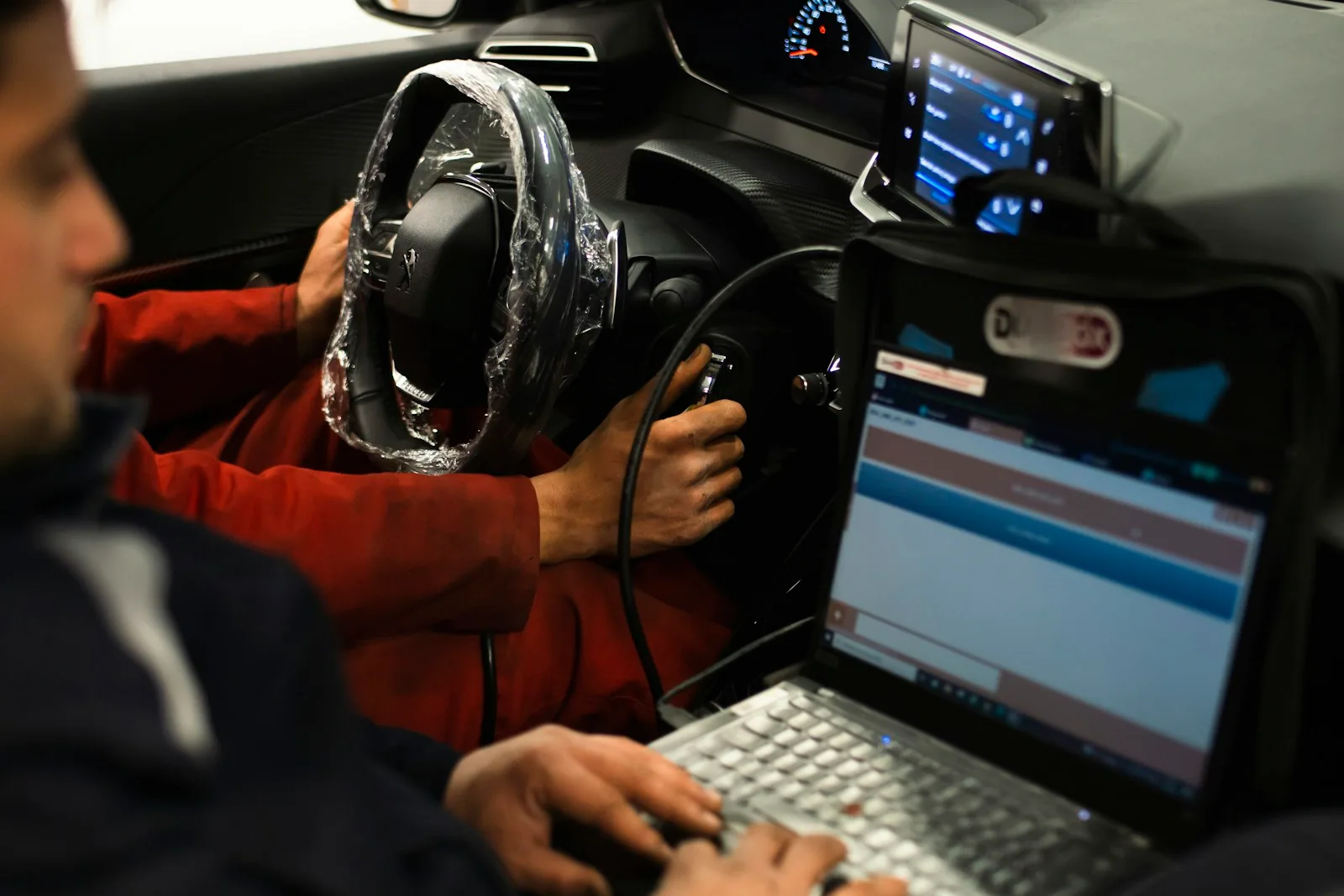
Volkswagen's connected cars are no longer just a promise. In July 2026, the automaker announced it had reached 100,000 connected units on the road in the United States — in less than two years. Alongside this milestone came OTTO, the first generative AI for automotive developed in the country. This post explains what changed and why it matters to anyone running tech and customer service in US businesses.
Quick summary (TL;DR):
- Volkswagen hit 100,000 connected cars in the US in under two years.
- VW Club subscribers get a $40/month fuel voucher ($240 over six months), via a partnership with Shell.
- OTTO is the first automotive generative AI in the US, built by VW Tech with Accenture and Google language models.
- The case shows how generative AI assistants move from the lab into the product — including customer service.
The 100,000 connected cars milestone
The news is straightforward: Volkswagen of America reported it has 100,000 connected cars on US roads. The number is less impressive for its size and more for its speed — it took less than two years to get there. This indicates the feature has moved from a top-tier luxury to a volume item.
Behind these 100,000 vehicles are over 15 interactive features across two fronts: the My VW app on the driver's phone and the VW Play Connect multimedia system in the dashboard. These include locating the car, checking fuel level remotely, locking and unlocking doors via phone, and receiving maintenance alerts.
A timeline helps understand the pace. In 2025, the Tera SUV was already connected from the factory. In 2026, models already on the road — T-Cross, Taos, and Jetta GLI — received the update and joined the platform. This gave the brand a portfolio of five vehicles with the technology available, explaining how the connected car base grew so quickly.
The benefit that became a hook: $240 in fuel
To celebrate the milestone, Volkswagen launched a direct financial benefit: VW Club subscribers receive a monthly $40 fuel voucher, in partnership with Shell. The benefit lasts six months, totaling $240. It's a classic recurring play — using a tangible perk to reinforce the connected service subscription, where the automaker wants to keep the customer long-term.
How a connected car works in practice
When we talk about connected cars, the technical concept is simple: the vehicle has a connectivity chip (a kind of embedded SIM) that keeps it online, exchanging data with the manufacturer's cloud. From there, everything an online software can do becomes possible inside the car — including updating functions without going to the dealership.
The table below summarizes what typically makes up a connected car experience like Volkswagen's:
| Feature | What it does | Where it appears |
|---|---|---|
| Location and status | Check position, fuel, and doors remotely | My VW app |
| Remote commands | Lock, unlock, and activate functions via phone | My VW app |
| Connected infotainment | Navigation, music apps, and online services on the dashboard | VW Play Connect |
| OTA updates | New features sent via the cloud, no dealership visit | Connected platform |
| AI assistant | Natural language responses about the vehicle | OTTO (2027 line) |
The key takeaway is that the car is no longer a "closed" product at the time of purchase. It now evolves after the sale, driven by software and data — the same logic that powers any modern application.
OTTO: the first automotive generative AI in the US
The most interesting chapter for tech professionals is OTTO. Volkswagen presents it as the first generative artificial intelligence developed by an automaker in the United States. It debuts in the 2027 line of Tera and Nivus models, within a new package called VW OTTO Club, which combines VW Club benefits with access to the assistant.
In practice, OTTO is a conversational assistant that understands the vehicle's context in real time. It answers open-ended questions about range and fuel economy, performs car health diagnostics in natural language, consults the manual generatively — returning instant images and summaries instead of endless PDFs — and talks about the brand's products, services, and technologies, while integrating with navigation and music.
Today it arrives for those with the new VW Tera with Android system and an active connected car plan. The automaker signals that new models will receive OTTO natively, along with new features. It's the typical software product roadmap: launch in a controlled slice, learn from real usage, and expand.
What sets a generative assistant apart from a voice command
It's worth explaining the difference, because that's the whole point. Old voice commands were rule-based: you had to say the exact phrase ("turn on air conditioning") and any variation would break it. A generative assistant uses language models (LLMs) and understands intent, not keywords. You ask "Can I make it to Chicago without refueling?" and it cross-references range, route, and tank level to answer. It's the difference between a menu and a conversation.
Why OTTO's architecture matters
OTTO wasn't built from scratch in a basement. It's the result of the VW Tech team in partnership with Accenture, using Google's language models as a base. This combination tells a story repeated across the industry: almost no one trains a foundational model from scratch. The path is to take a mature LLM and specialize it for the domain — in this case, the universe of a Volkswagen car.
The secret lies in the context layer. A generic LLM doesn't know the range of your Tera or what page 214 of the manual says. What turns a generic model into a useful assistant is connecting it to proprietary data (car telemetry, manual, service catalog) through techniques like RAG (retrieval-augmented generation). Without that bridge, you have a chatbot that talks nicely but gets the essentials wrong.
This is the same design we use in applied AI projects: off-the-shelf model + client data + integration layer. Volkswagen simply proved, at automaker scale, that the recipe works outside pure software.
What connected cars teach US businesses
This case isn't just about cars. There are three lessons that apply to any business serious about using generative AI.
- Proprietary data is the asset, not the model. The LLM is a commodity; what no one can copy is your base — customer history, catalog, manuals, support tickets. That's what makes the assistant answer what only you know.
- Start narrow and expand. VW didn't put OTTO in the entire fleet at once. It launched on one model, with one system, for an audience with an active plan. Small scope reduces risk and accelerates learning.
- Recurrence changes the product. Connected cars turn a one-time sale into an ongoing relationship. The same logic applies to digital services: when the product lives online, it generates data, engagement, and recurring revenue.
If you follow the advance of AI agents for businesses, you'll recognize the pattern. OTTO is, at its core, a vertical agent: focused, with access to specific data and tools, solving real tasks instead of having generic chat.
Generative AI assistants beyond the dashboard: customer service
Here's the direct bridge to the daily life of anyone selling or serving. The same technology that answers about a connected car's range can answer about delivery time, order status, or plan questions on your company's website or app. The domain changes, not the architecture.
A generative assistant well-connected to the business knowledge base provides 24/7 service, understands poorly phrased questions, summarizes policies, and escalates what needs a human. It's what separates a menu bot from an agent that actually resolves. For a read on how this movement is reshaping enterprise software, check our overview on what Google I/O 2026 changes for US businesses and the detailed look at Gemini Spark, Google's 24/7 AI agent.
The message is this: if an automaker can put generative AI inside a popular car's dashboard in the US, putting a competent agent in your customer service channel is no longer a sci-fi project. It's integration engineering — and that's where your data and flows come in.
In practice, the effort to build such an assistant is much smaller than many companies imagine. You don't need to train a model from scratch or hire an AI research team. The work is in three areas: organizing the knowledge base (catalog, FAQs, policies), connecting the model to that base securely, and designing the handoff points to a human agent. It was exactly this type of integration that allowed Volkswagen to turn its connected cars into vehicles that talk — and it's replicable at small and medium business scale, not just automakers.
Data, CCPA, and the responsibility of the connected car
A connected car is, by definition, a car that collects data. Location, driving habits, feature usage — all of it travels to the cloud. From a business perspective, it's gold; from a compliance perspective, it's responsibility. In the US, CCPA and other state privacy laws require a legal basis for processing personal data, transparency about what is collected, and the ability for individuals to control their information.
For companies inspired by the model, the lesson is not to leave governance for later. Before plugging an AI assistant into your customer base, define what can be used, for how long, and with what consent. A generative assistant that "reads" the entire base without control is a leak waiting to happen. Connected car technology is only sustainable because (ideally) it comes with a clear privacy policy — and the same goes for your chatbot.
Conclusion: the car became software, and so did your business
Volkswagen's 100,000 connected cars and the debut of OTTO tell a story bigger than the automotive industry: that a good product today is one that learns, updates, and talks. Generative AI has left the demos and entered the dashboard of a car driving in Chicago, San Francisco, and across the country.
If you lead technology or customer service in a US business, the next step isn't to buy a model — it's to map where your data and flows would allow an assistant to truly solve. Start narrow, measure, and expand. That's exactly what the automaker did. Want to discuss how an AI agent connected to your data would fit into your customer service? That conversation is worth more than any fuel voucher.
Related posts
Manus AI: The Chinese Agent's 2026 Saga & Lessons for US Businesses
Acquisition blocked by Beijing, two days offline, and data deletion: what the Manus case teaches those who use AI agents.

What Counts as AI in 2026: A U.S. Legal Guide
Is your chatbot AI in the eyes of the law? Three U.S. regulations hinge on that answer—and most companies aren't ready.
Midjourney V8.2: AI Creatives for Ads in 2026
Draft mode, V8.2, commercial license, and the billion-dollar Hollywood lawsuit: the practical Midjourney map for ad creative production.