Google Engineering Center in São Paulo: AI and Security
Google opens its 2nd engineering center in Brazil, inside IPT at USP, focusing on AI, digital security, and accessibility. What changes in practice.
by Cleverson Gouvêa
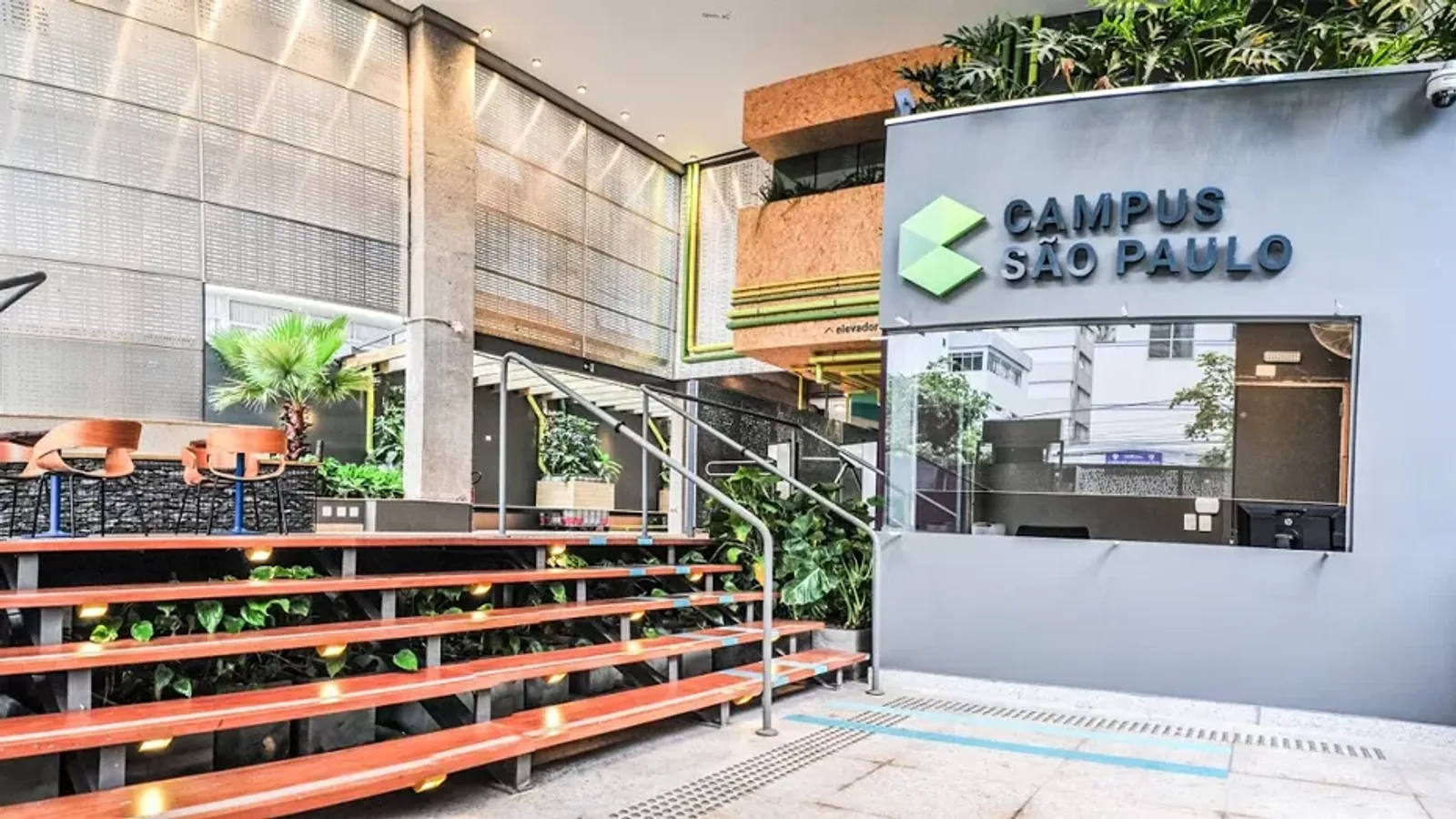
Google's engineering center in São Paulo is no longer a project—it's now a real address: the company inaugurated on May 27, 2026, its second engineering base in Brazil, located inside the Institute for Technological Research (IPT) on the University City campus of USP. The unit is born with a clear mission—protect users, combat fraud, and develop artificial intelligence applied to privacy and accessibility. In this guide, I break down what really matters for those working with technology in the country.
TL;DR
- Google's engineering center in São Paulo will house up to 400 employees and begin operations in July 2026.
- It is Google's second engineering center in Brazil—the first is in Belo Horizonte, with about 20 years of operation.
- It focuses on three fronts: the first Google Safety Engineering Center (GSEC) in Latin America, the first Accessibility Discovery Center (ADC) in the region, and the reopening of Google Campus for AI-First startups.
- Technical focus: digital security, privacy, abuse prevention, and infrastructure for AI agents.
- Brazil became a laboratory because it combines high smartphone adoption, sophisticated financial systems, and a complex fraud environment.
What changes with Google's engineering center in São Paulo
The inauguration took place at the Adriano Marchini building, inside the IPT campus, and was attended by Mayor Ricardo Nunes and the State Secretary of Science and Innovation, Vahan Agopyan, representing Governor Tarcísio de Freitas. The partnership between Google, IPT, and the Government of São Paulo was formalized in February 2024, under the IPT Open program, and took over two years to deliver the space.
The number that sums up the ambition is straightforward: capacity for 400 employees. To put the leap into perspective, Google started in Brazil in 2005 with 12 engineers. Today, there are over 400 engineers across both bases and more than 2,000 employees in the country overall. This is not a commercial branch—it's cutting-edge product development being written from São Paulo.
Fábio Coelho, President of Google Brazil, summed up the tone of the ceremony: "Opening our Engineering Center in São Paulo is a true celebration of the positive impact we have generated in Brazil over the past 20 years." Meanwhile, Bruno Pôssas, VP of Global Engineering for Google Search, called the city "a breeding ground for engineering talent"—and it's precisely that talent the company wants to retain without needing to export it.
GSEC: Latin America's first Google Safety Engineering Center
The centerpiece of the new operation is the Google Safety Engineering Center (GSEC), the first in Latin America. GSEC stands for the global hubs that Google dedicates exclusively to user security and privacy. Before this, there were units in Munich, Dublin, and other strategic locations. Bringing one to São Paulo places Brazil on the map of those who decide how scams, malware, and abuses are combated on the platform.
In practice, the GSEC brings together engineers who work on fraud detection, phishing protection, account security, and online threat mitigation. It's the kind of team that builds the brakes that appear on Android and Chrome when something smells like a banking scam—a topic I've already delved into in the analysis of Android 17's AI and security news.
Why security and AI go hand in hand here
It's no coincidence that the center mixes security with artificial intelligence. The frauds of 2026 are AI-generated—voice deepfakes, cloned messages, fake websites assembled in minutes. The defense needs to run on the same ground: models that classify risk in real-time, on-device whenever possible, without sending sensitive data to the cloud. That's the kind of problem the São Paulo GSEC was set up to solve.
Why Brazil became a digital security laboratory
The choice of Brazil is not a courtesy. Bruno Possas, VP of Engineering, was transparent: problems "experienced with intensity in Brazil" help guide protection products for markets with similar challenges. In other words: if the defense can withstand the Brazilian ecosystem, it can withstand almost anywhere.
Three characteristics make the country a unique testing ground:
- Massive smartphone adoption—a large portion of the population accesses digital services exclusively via mobile.
- Advanced financial system—Pix popularized instant transfers, which also attracted an equally instant scam industry.
- Sophisticated fraud environment—social engineering at scale, with gangs that professionalized credential theft.
Anyone developing software in the country knows this pressure. The threats don't just affect end users: the development chain itself has become a target, as shown by the case of GitHub invaded by a malicious VS Code extension. A security center operating from here responds to this scenario with people who live the problem, not just read about it in reports.
Accessibility Discovery Center: assistive technology at the center of the table
The second front is the Accessibility Discovery Center (ADC), also the first in Latin America. It is a space dedicated to developing and testing assistive technologies in direct collaboration with the disability community. Instead of treating accessibility as a checklist item at the end of the project, the ADC puts real users at the beginning—true participatory design.
This tends to influence features that reach everyone: more accurate captions, smoother screen reading, voice control that understands Brazilian accents. For those building digital products, it's a practical reminder that well-done accessibility improves the overall experience—not just meets a legal requirement.
Google Campus reopened: betting on AI-First startups
The third piece is the reopening of Google Campus, the startup support space. The planned capacity is about 120 people per week, and the declared focus is on AI-First companies—startups born with artificial intelligence at the core of the product, not as an embellishment. The proposal is to connect entrepreneurs, universities, and large companies at the same address.
For the Brazilian ecosystem, this means access to infrastructure, mentorship, and proximity to Google engineers without needing a ticket to Silicon Valley. Those following the company's AI moves—which I detailed in the summary of Google I/O 2026 for Brazilian companies—see here the local bridge between frontier research and the business born around the corner.
Two poles: Belo Horizonte and São Paulo divide Google's engineering in Brazil
With the São Paulo opening, Google now operates its Brazilian engineering across two complementary poles. Belo Horizonte, active for about 20 years, has historically concentrated teams focused on search, infrastructure, and large-scale products. São Paulo is born with a different, more specialized focus: security, privacy, accessibility, and the technical foundation for the AI agents that Google has been pushing to the center of its strategy.
This division is not cosmetic. Maintaining two centers with distinct focuses reduces concentration risk and brings each team closer to the ecosystem it serves. In São Paulo, proximity to the financial system, fintechs, and the country's largest fraud park gives the GSEC a constant flow of real cases to study. It's security engineering fueled by field data, not lab simulation.
For Brazilian professionals, the outlook is encouraging. Until recently, anyone wanting to work on frontier problems in security or AI almost always had to emigrate. Now there is a local path: two engineering centers, senior positions, and the chance to write code that runs for billions of users without leaving the Brasília time zone. Add to that the Google Campus hosting startups every week, and you have a complete circuit—from the large company that sets standards to the startup testing hypotheses—operating within the same university campus. It's this density that often turns a city into a true technology hub, not just a destination for a nice office.
The building: a historic IPT revamped with sustainability
It's worth noting the physical detail, because it says something about the intention. The Adriano Marchini building is a 1940s construction that underwent a major renovation. The renovation prioritized sustainability: solar panels, natural ventilation and lighting, rainwater reuse, and a thermal design that eliminates the need for air conditioning for more than 60% of the year.
Reusing a historic building within a public university, instead of erecting a new glass tower, sends a message: the operation wants to be closely tied to academia and talent development, not isolated in a corporate condominium. For USP and IPT, it's an injection of technological relevance on campus.
What changes for Brazilian companies and developers
Enough talk, here's the concrete. See what the center's arrival tends to unlock:
- More senior engineering positions—security and AI teams pay well and raise the local market.
- Protection products designed for Brazil—defenses calibrated for Pix, boletos, and message-based scams, not just the North American standard.
- Higher accessibility standards—when Google tests assistive technology here, the bar rises for the entire sector.
- Pipeline for AI startups—the Campus becomes a gateway for funding, partnerships, and technical validation.
- Talent that stays—Brazilian engineers with frontier problems to solve without moving abroad.
For software developers, the immediate lesson is one of posture: security and AI have stopped being separate departments. The attacker uses AI, the defender uses AI, and ignoring this leaves you exposed—something that applies as much to a bank as to the customer service agent many companies are putting on WhatsApp, as discussed in what AI agents change for companies.
Summary of numbers and components
| Item | Detail |
|---|---|
| Inauguration | May 27, 2026 |
| Start of operations | July 2026 |
| Location | Adriano Marchini Building, IPT, University City (USP) |
| Capacity | Up to 400 employees |
| Position | 2nd Google engineering center in Brazil (1st in Belo Horizonte) |
| GSEC | 1st Google Safety Engineering Center in Latin America |
| ADC | 1st Accessibility Discovery Center in the region |
| Google Campus | ~120 people/week, focus on AI-First startups |
| Program | IPT Open (partnership formalized in February 2024) |
Conclusion: what to watch for starting in July
Google's engineering center in São Paulo is not just new square footage—it's a signal that Brazil has moved from the position of consumer market to co-author of the security and AI that the world will use. Real operations begin in July 2026, and that's when we can measure whether the jobs, startup partnerships, and products calibrated for the country appear as promised.
At Agathas Web, we follow this movement closely because it changes the ground on which we build solutions every day. If your company is thinking about adopting AI responsibly—without opening a security gap—this is the time to plan the right architecture, not to scramble after an incident. Learn how we apply AI with security in our products and use Google's arrival in Brazil as the push to professionalize your own digital strategy.
Related posts
Manus AI: The Chinese Agent's 2026 Saga & Lessons for US Businesses
Acquisition blocked by Beijing, two days offline, and data deletion: what the Manus case teaches those who use AI agents.

What Counts as AI in 2026: A U.S. Legal Guide
Is your chatbot AI in the eyes of the law? Three U.S. regulations hinge on that answer—and most companies aren't ready.

Midjourney V8.2: AI Creatives for Ads in 2026
Draft mode, V8.2, commercial license, and the billion-dollar Hollywood lawsuit: the practical Midjourney map for ad creative production.