Fable 5 and Mythos 5: Why the US Demanded the Block
Three days after launch, the US government ordered Anthropic to cut off access. Understand what happened and what to do.
by Cleverson Gouvêa
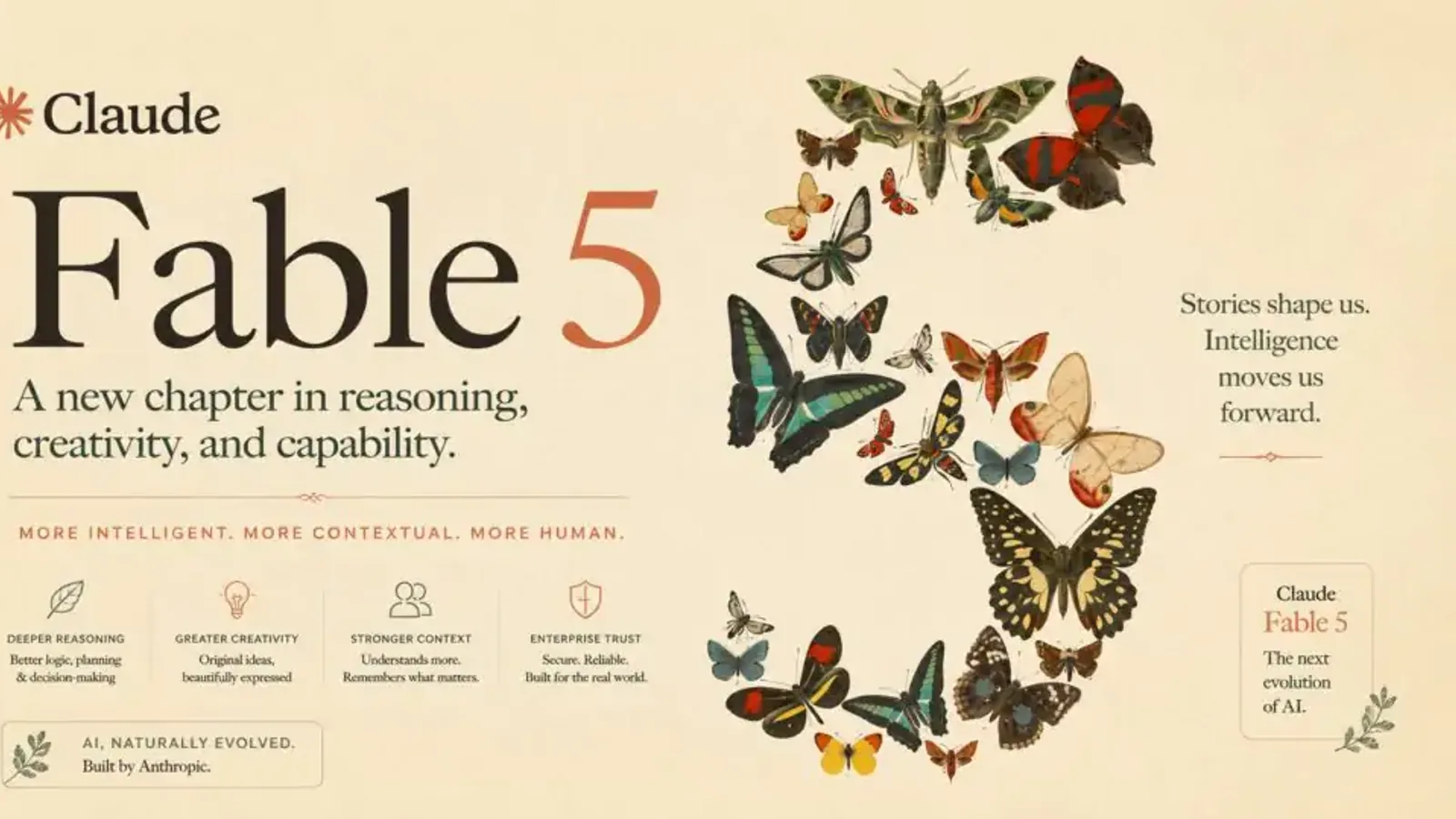
The Fable 5 and Mythos 5 became, within hours, the most talked-about regulatory case in the AI industry in 2026. Three days after Anthropic announced the models as the most powerful they had ever released, the United States government demanded a total block on access by any foreigner—inside or outside the country. In this guide, I explain what happened, why it happened, and what it changes for those using AI in Brazil.
TL;DR
- On June 12, 2026, at 5:21 PM ET, Anthropic received an export control directive from the US government.
- The order mandates suspending Fable 5 and Mythos 5 for all foreign citizens, including Anthropic's own employees.
- The stated reason is national security—especially Mythos 5's ability to find novel software vulnerabilities.
- Anthropic disagreed, complied with the order, and blocked global public access to both models. The other Claude models remain available.
- If you depended on these models, there are immediate paths forward—I explain at the end of the text.
The timeline of the Fable 5 and Mythos 5 block
The timeline is short and helps understand the magnitude of the blow. On Tuesday, June 9, 2026, Anthropic launched Claude Fable 5 and Claude Mythos 5, described by the company as the most capable AI systems they had ever shared—strong in software engineering, scientific research, and computer vision.
On the following Friday, June 12, at 5:21 PM ET, the government directive arrived. According to the company's official statement, the order is an export control directive citing national security authorities, without detailing the specific technical concern. Anthropic complied and, in short order, shut down access to both models.
Note the detail that makes the episode unusual: it was not the company that decided to pull the models on its own, as often happens when a security problem is discovered. It was the state that demanded the block of Fable 5 and Mythos 5, turning frontier software into an item subject to export licensing.
What the export control order says
The legal point here is what caught the attention of those following tech policy. The directive classifies Fable 5 and Mythos 5 as items requiring a license for export, reexport, or domestic transfer. In practice, this goes far beyond "blocking China."
The scope described by the press and the company itself is broad:
- Any foreign citizen, inside or outside the US, loses access.
- This includes foreign employees of Anthropic itself, who cannot use the models they helped build.
- The restriction does not distinguish between personal, corporate, or research use.
Since Anthropic cannot verify the nationality of each individual user in real time without restructuring the entire product, the most drastic solution was taken: blocking public access to both models for everyone, globally. This is how an order directed at "foreigners" ended up taking the models offline even for users in the United States itself.
Why Mythos 5 was so alarming
The core of the concern is offensive security capability. Mythos 5, according to specialized press coverage, is especially good at detecting software vulnerabilities—some of which have had no known solution for decades. This same ability was already being used by US authorities and selected companies to close gaps before attackers could exploit them.
The problem is that vulnerability discovery is a double-edged sword. The ability that plugs a security hole is the same one that, in the wrong hands, finds the entry point for an attack. When you add agentic capabilities—models that execute tasks in sequence without constant human supervision—the scenario that worries regulators is an autonomous agent capable of scanning systems and chaining exploits on its own.
This risk is not abstract. In 2026, we have already seen software supply chains contaminated at scale, as I detailed in the case of NPM packages infected by Shai-Hulud. An AI that automates the reconnaissance phase of such attacks changes the game for both sides—defense and offense.
What changes in practice for Brazilian companies
If your operation did not use Fable 5 and Mythos 5 in production, the direct impact is zero—the other Claude models remain normally available. Anthropic's message was explicit: "access to all other Anthropic models will not be affected."
For those who had already tested or planned to migrate to the top of the line, however, there is work to be done. Here is what the block of Fable 5 and Mythos 5 means in the daily life of a technical team in Brazil:
- Broken pipelines: any automation pointing to these models via API will fail. Reverting to the previous model is the immediate path.
- Stalled proofs of concept: demos and prototypes built on frontier capability need to be recalibrated for available models.
- Single-vendor risk: the episode is a practical reminder not to tie critical product to a single model from a single provider.
The good news is that the frontier of capability has not disappeared from the market—it is just unavailable in these two models. There are competitive alternatives in agentic coding, as I discussed when analyzing Google Antigravity 2.0, and in corporate assistants, as in the case of Gemini Spark for businesses.
Anthropic's response
The company complied with the order but made it clear that it disagrees with it. The technical argument is straightforward: the government pointed out only a narrow and non-universal jailbreak, and according to Anthropic, "other publicly available models can discover the same vulnerabilities without needing a bypass."
In other words, in the company's view, the capability that motivated the block is not exclusive to Fable 5 and Mythos 5—it already exists in the market. Anthropic also warned of the systemic effect: applying the same criterion broadly "would essentially halt every new model launch from all frontier providers."
The company's defense relies on the strategy of defense in depth—overlapping layers of protection, rather than a single barrier. Anthropic claims to have extensively tested the safeguards of Fable 5 and calls for a more transparent process guided by technical evidence, rather than verbal evidence. So far, according to the company, the justification presented was mostly verbal and without detailing the specific breach.
There is a tension point hard to ignore here. The same company that built its reputation around AI safety is now blocked precisely for delivering a model that was too capable. If the government's argument holds, it penalizes those who document their own risk capabilities—the opposite of the incentive expected from good security policy.
How the market and regulators reacted
The reaction was immediate and divided. On one hand, part of the security community views any brake on tools capable of automating exploit discovery favorably—after all, the line between defense and offense is thin. On the other hand, developers and companies that had already integrated the models complained about the lack of warning and the abrupt way the block of Fable 5 and Mythos 5 came into effect.
For competitors, the episode lights a yellow signal. If a frontier model can be treated as a controlled export item overnight, every provider launching something at the same capability level carries this risk. This could, in practice, slow down the pace of top-tier launches—exactly the systemic effect Anthropic cited in its defense.
It is worth remembering that this is not an isolated debate. Throughout 2026, large-scale security incidents—from malicious extensions to repository compromises, as in the case of GitHub invaded by a malicious VS Code extension—have been pressuring governments to act on technologies that expand the attack surface. Agentic AI has entered the same radar.
The precedent: AI as a controlled export item
Regardless of who is right on the technical merits, the episode sets a precedent worth watching. With Fable 5 and Mythos 5 blocked, it is the first time a general-purpose AI model has been treated, in practice, as a controlled export technology in the same way as certain chips and military equipment.
This has three medium-term implications for those building products with AI:
| Dimension | Before the block | After the block |
|---|---|---|
| Top-tier availability | Globally open at launch | Subject to possible export license |
| Regulatory risk | Low and predictable | High and potentially sudden |
| Recommended strategy | Quick adoption of the newest | Redundancy across models and providers |
For the Brazilian developer, the lesson is about architecture, not panic: treat the AI provider like any other critical infrastructure dependency. Have a tested plan B and abstract the model layer so that switching providers is a configuration change, not a rewrite.
What to do if you depended on these models
If your stack touched Fable 5 and Mythos 5, here is the practical checklist I would follow today:
- Revert to the previous stable model in API calls and validate output quality before anything goes back live.
- Map what was exclusive to the blocked models. In most cases, the actual task remains feasible with the previous generation model.
- Introduce an abstraction layer between your code and the provider, if you don't have one already. This reduces the cost of any future switch.
- Document the regulatory exposure of your product. If it depends on a single frontier model, record this as a risk.
- Monitor official announcements—the situation can evolve quickly, including partial release under license.
Most commercial applications—customer service, data extraction, classification, text generation—do not need the most powerful model in the world. They need reliability and a provider that does not shut down service without notice. That is the real lesson from the block of Fable 5 and Mythos 5.
Conclusion: capability is no longer the only variable
The case of Fable 5 and Mythos 5 marks a turning point: raw model capability is no longer the sole selection criterion. Availability, regulatory stability, and vendor independence have now entered the equation. Those building serious products with AI need to design for the possibility that a model might simply disappear from the catalog overnight.
At Agathas Web, the recommendation we give our clients is simple: adopt the frontier when it adds real value, but never depend exclusively on it. If you want to review your product's AI architecture and build a contingency plan, talk to us—it's the kind of assessment worth doing before the next regulatory scare, not after.
Related posts

Measuring AI ROI: Moving from Pilot Projects to Business Impact
While 80% feel AI boosts productivity, only 37% see profit impact. Learn how to measure ROI, calculate total cost, and scale AI effectively.

Manus AI: The Chinese Agent's 2026 Saga & Lessons for US Businesses
Acquisition blocked by Beijing, two days offline, and data deletion: what the Manus case teaches those who use AI agents.

What Counts as AI in 2026: A U.S. Legal Guide
Is your chatbot AI in the eyes of the law? Three U.S. regulations hinge on that answer—and most companies aren't ready.