Institutional Moodle: Lessons from a Large University's Online Learning Management
Multiple Moodle instances, 24-hour sync delays, and new online learning regulations: the UFBA case highlights four critical issues that can cripple any institutional Moodle.
by Cleverson Gouvêa

Every semester, searches for AVA Moodle UFBA surge — and it's not academic curiosity. It's students trying to access a course that hasn't appeared yet, professors looking for a space the coordinator hasn't created, and administration discovering the virtual learning environment didn't communicate with the academic system. UFBA's 2026.2 semester began on August 19, 2026. The pattern repeated.
I've worked with Moodle since 2008 and have administered critical online learning environments for educational institutions. In this post, I use the UFBA case — a large public university with multiple instances running — to break down the four problems that cripple any institutional LMS in 2026: platform fragmentation, synchronization with the academic system, version lifecycle, and the new regulatory framework for online learning.
TL;DR
- The AVA Moodle UFBA is not a single address: the university operates more than one Moodle environment simultaneously —
ava.ufba.brandmoodle.ufba.br, both under STI and NEAD, in addition to SIGAA's Virtual Class, adopted for undergraduate programs starting 2025.2.- The 2026.2 semester began on 08/19/2026 and ends on 12/19/2026 — the peak of access and support tickets occurs in the first two weeks, not during exam week.
- Most "I can't log in" issues are not bugs: they are due to synchronization between the academic system and the VLE, which can take up to 24 hours after registration.
- Moodle 4.5 LTS lost general support on 10/06/2025; the next LTS will be 5.3, scheduled for 10/05/2026.
- Brazil's Decree 12.456/2025 and MEC Ordinance 506/2025 established formal requirements for digital platforms, with a compliance deadline until May 2027.
Why Searches for AVA Moodle UFBA Surge in August
The calendar explains almost everything. Those who administer AVA Moodle UFBA deal with rigid seasonality, and it's non-negotiable. According to the academic calendar approved by SUPAC, UFBA's 2026.2 semester began on August 19, 2026, reaches 25% of the period on September 17, 50% on October 17, and concludes on December 19. In the first two weeks, three groups hit the same environment simultaneously: freshmen who have never used the platform, returning students adjusting their registration, and professors publishing last-minute materials.
The result is predictable for anyone who has operated an environment the size of AVA Moodle UFBA in production. The year's peak in concurrent sessions doesn't happen during assessment week — it happens in the first week of classes. That's when the database suffers, the cache melts down, and the support team discovers the server was sized for average load, not for peak.
What the Peak Really Demands from Infrastructure
Three things break first, almost always in this order. The first is the PHP-FPM pool: poorly calculated pm.max_children transforms a 15-minute peak into a 30-second page load queue. The second is the session — when the session lives on disk instead of in Redis, each new login competes for I/O with the rest of the site. The third is Moodle's cron, which accumulates registration, notification, and indexing tasks precisely when the server is busiest.
None of these three appear in the PHP error log. They show up as "the VLE is slow" in the class WhatsApp group, which is much worse to diagnose after the fact.
The Anatomy of AVA Moodle UFBA: Three Environments, One Student
Here's the detail most analyses ignore. The AVA Moodle UFBA is not a single address. The university maintains at least two distinct Moodle environments online, both with institutional visual identity and both administered by the Superintendence of Information Technology in conjunction with NEAD, with support via email [email protected].
ava.ufba.br
It's the portal most people look for when they type AVA Moodle UFBA into a search engine. It presents itself as a support environment for undergraduate and graduate components, with divisions for undergraduate courses, stricto sensu programs, lato sensu programs, and professional development. Access is via federated authentication, using the same username and password as the UFBA network — a single sign-on model that eliminates an extra password but creates a hard dependency: if the identity provider goes down, the entire VLE goes down with it.
moodle.ufba.br
It organizes courses by on-site support units, online learning courses, open courses, and administrative bodies. It is the environment with the historical archive and the oldest FAQ and manual base.
SIGAA Virtual Class
Since 2025.2, UFBA began using SIGAA for undergraduate programs, replacing the old SIAC — the university had already been using the system for graduate programs since 2018. SIGAA brings its own virtual class environment, with course materials, assignments, and grades. In other words: in addition to the two AVA Moodle UFBA instances, there is a third surface where the student can legitimately expect to find their course.
This is the root of the confusion. Students don't search for "ava.ufba.br"; they search for AVA Moodle UFBA because they don't know which of the three portals is the correct one for that specific course. And not knowing is reasonable — the answer depends on each instructor's decision.
Comparison: The Three Layers of the Ecosystem
| Layer | Declared Function | Who Decides Usage | Typical Risk |
|---|---|---|---|
| ava.ufba.br | Support for undergraduate and graduate components, with federated login | Coordination and Instructor | Dependency on identity provider |
| moodle.ufba.br | Units, online learning courses, open courses, and administrative bodies | Unit and Instructor | Legacy archive and divergent versions |
| SIGAA Virtual Class | Class linked to official academic record | Academic System | Function overlap with Moodle |
Maintaining two instances like AVA Moodle UFBA is not an error in itself — federal universities do this for legitimate reasons, such as isolating regulated online learning from extension courses. It becomes an error when no one documents the rule of which course resides where. The cost of this omission is measured in support ticket volume, not server load.
The Invisible Bottleneck: Synchronization Between Academic System and VLE
Ask any institutional Moodle administrator what the number one support ticket at the start of the semester is. The answer is always the same: "my course isn't showing up." And it's almost never a Moodle failure.
AVA Moodle UFBA's own support documentation explains the mechanism. If a course component is not listed, it's because the department has not yet sent the semester's course list to the Dean of Academic Affairs. If a professor doesn't see the environment, it's because the coordinator has not yet registered them as an instructor for that component. And, even after correct registration, the guidance is to wait for synchronization between systems, which can take up to 24 hours.
Why 24 Hours Is a Product Problem, Not a Technology Problem
Twenty-four hours is an eternity in the first week of classes. Students miss the first graded activity, open support tickets, post in the group chat, and tag the coordination. A single synchronization delay generates five to ten avoidable human interactions. In an environment the size of AVA Moodle UFBA, this turns into hundreds of support tickets in just a few days.
The technical point: daily batch synchronization is a legacy from an era when integration meant exporting CSV at night. Today, we can do better. The options, in increasing order of effort:
- Increase job frequency. Running enrollment synchronization every 15 minutes instead of once a day solves 80% of cases without changing architecture. It only requires that the query to the academic system be incremental, not a full scan.
- Use Enrollment via web service. Moodle exposes enrollment functions in its web services API. The academic system calls Moodle at the moment of approval, and the student enters the course in seconds.
- Adopt LTI for reverse coupling. When the academic system is the entry point, publishing the Moodle course as an LTI tool resolves authentication and provisioning in the same request.
- Instrument the queue. Regardless of the path, add metrics to the delay: time between approved enrollment and visible user in the course. Without this number, no one knows if it has improved.
When NOT to do it: if the institution is in an academic system replacement window — exactly the case for UFBA in the SIAC to SIGAA transition — rewriting the integration in the middle of the migration multiplies the risk. In this scenario, increase job frequency and wait for the dust to settle.
Version Lifecycle: Where Institutional Moodle Falls Behind
This is the part that often catches institutions by surprise, and it applies to any institutional Moodle beyond UFBA. Moodle's official release calendar is public and unforgiving:
| Version | Release | End of General Support | End of Security Support |
|---|---|---|---|
| 4.5 (LTS) | 10/07/2024 | 10/06/2025 | 10/04/2027 |
| 5.0 | 04/14/2025 | 04/20/2026 | 10/05/2026 |
| 5.1 | 10/06/2025 | 10/05/2026 | 04/19/2027 |
| 5.2 | 04/20/2026 | 04/19/2027 | 10/04/2027 |
Translating to August 2026: those running 5.0 have security fixes until October 5 of this year — just a few weeks away. Those running 4.5 LTS have not received regular bug fixes since October 2025, only security patches until 2027. And the next extended support version will be 5.3, scheduled for October 5, 2026, with security until 2029.
The practical takeaway for anyone administering an environment like AVA Moodle UFBA is direct: if you're not updating every semester, skip intermediate versions and plan the jump to 5.3 when it's released, taking advantage of the recess window between December 19, 2026, and the start of 2027.1. Updating Moodle during class week is asking for a major internal incident.
The Plugin Trap
What blocks updates is almost never the Moodle core. It's the third-party plugin — the customized theme, the custom-built report from 2019, the integration plugin with the library system. Before scheduling any upgrade, run an inventory: list all additional plugins, check their declared compatibility with the target version, and decide case-by-case whether to update, replace, or retire. An orphan plugin is technical debt with compound interest.
AI in Moodle 5.1: What Changes for Instructors
Starting with Moodle 5.0 and 5.1, generative AI ceased to be a third-party plugin and became a core subsystem, organized into three concepts: providers (external services, such as OpenAI, Azure AI, Ollama, and DeepSeek), actions (what the AI does), and placements (where it appears in the interface). 5.1 added Summarize and Explain placements, which work on the content of any course page.
The most relevant change for governance is elsewhere: in 5.1, instructors can turn AI on or off within the course itself, and can refine by activity, regardless of the administrator's global configuration. Add to this AI usage reports and Open Badges 3.0 support.
In an AVA Moodle UFBA with dozens of departments, this resolves a real political impasse. Previously, the AI decision was binary and centralized: either the entire VLE had AI, or no course did. Now, each course department can decide. If your institution postponed the discussion about AI in the VLE because there was no way to delegate the decision, that argument is no longer valid.
New Online Learning Regulations Changed the Bar for Your Virtual Environment
Brazil's Decree No. 12.456, dated May 19, 2025, redefined online learning policy for undergraduate programs. The points that most affect the operation of a VLE:
- Predominantly distance learning courses must ensure at least 20% of the workload in in-person or mediated synchronous activities.
- Medicine, Nursing, Dentistry, Psychology, and Law will now only be offered in in-person mode.
- The tutor role has been replaced by the pedagogical mediator, with a requirement for training compatible with the course.
Brazil's MEC Ordinance No. 506, dated July 10, 2025, detailed what the platform needs to deliver: blended and distance learning courses must offer, at a minimum, resources that constitute a Virtual Learning Environment, educational management, videoconferencing interaction tools, and digital repositories for bibliographic and didactic material, in accordance with the Course Pedagogical Project. Platforms must also provide resources that ensure accessibility and inclusion.
The deadline: institutions have until May 2027 for full compliance, but courses created after the decree's publication already follow the rules immediately. And the bar is still moving — in August 2026, Brazil's National Council of Education opened a public consultation on the draft resolution for online learning on the Brasil Participativo platform, with contributions until August 14 and systematization between August 15 and 22, 2026. The final resolution follows.
What This Means in Technical Requirements
Translated into the backlog for anyone administering an environment like AVA Moodle UFBA today: integrated videoconferencing (BigBlueButton or equivalent, with recording and attendance tracking), an accessible content repository from within the course, an audit trail that proves mediated synchronous activity, and real accessibility — not just a badge, but contrast, keyboard navigation, and screen reader compatible content. If your institution needs to demonstrate 20% synchronous workload, the report proving this must exist before the evaluation visit, not during it.
Checklist for the Semester Start Peak
What I would do in the two weeks before the first day of classes, in any environment the size of AVA Moodle UFBA:
- Load test with a real-world scenario — mass login plus course listing, not generic navigation. That's the first-day pattern.
- Session and cache in Redis, with a defined memory policy. Session on disk is the cheapest bottleneck to eliminate.
- Review cron: run every minute, with heavy indexing and backup tasks scheduled for overnight.
- Anticipate the creation of spaces for courses with the highest number of enrollments, without waiting for the instructor's request.
- Publish a portal map: a single page stating which environment serves which type of course, with a direct link. This reduces support tickets more than any optimization.
- Monitor synchronization delay as a business metric, with an alert above the acceptable limit.
- Freeze changes in the first two weeks. No upgrades, no new themes, no plugins.
Mobile is the Other Peak Nobody Measures
There's a detail most institutions discover late, and AVA Moodle UFBA is no exception: much of the virtual environment access on the first day comes from mobile phones, in the registration line, on the bus, in the hallway. And the official Moodle app handles the basics but doesn't carry the institution's brand nor allow segmented communication.
I've already written in detail about this trade-off in the comparison between the Moodle Mobile App and a custom app and about the concrete gains of a custom-branded Moodle app. Two points are relevant for the semester start scenario: push notifications are the fastest channel to announce that a course has been released, and offline mode supports students with unstable connections — a reality in much of rural Bahia and Brazil.
A push notification saying "your course is now available" eliminates half of the synchronization support tickets. It's the cheapest solution for the most expensive problem in this post.
Conclusion: What to Take from the UFBA Case for Your Environment
The AVA Moodle UFBA case is useful precisely because it's not exceptional. A large institution, with a competent technical team, accumulated instances for legitimate historical reasons, inherited a 24-hour synchronization from a previous era, and now needs to adapt to a new regulatory framework — all while changing its academic system. It's an accurate snapshot of dozens of universities and hundreds of private institutions in Brazil in 2026.
If you administer a similar environment, start with the cheapest solutions: publish the portal map, increase the frequency of the enrollment job, and move sessions to Redis. Then plan the version jump for the recess window and assemble the compliance dossier with Brazil's Ordinance 506 well in advance of May 2027.
At Agathas Web, I've worked with Moodle for over fifteen years, covering Linux infrastructure, Redis performance, and custom applications for educational institutions. If your environment shows these symptoms, contact me for a technical discussion — even if the conclusion is that the adjustment fits within your internal team.
Sources consulted: SUPAC/UFBA academic calendar, ava.ufba.br, moodle.ufba.br, STI/UFBA on SIGAA for undergraduate programs, Moodle release calendar, Moodle 5.1 AI placements documentation, Brazil's MEC Ordinance No. 506/2025, and Agência Brasil on the CNE public consultation.
Related posts
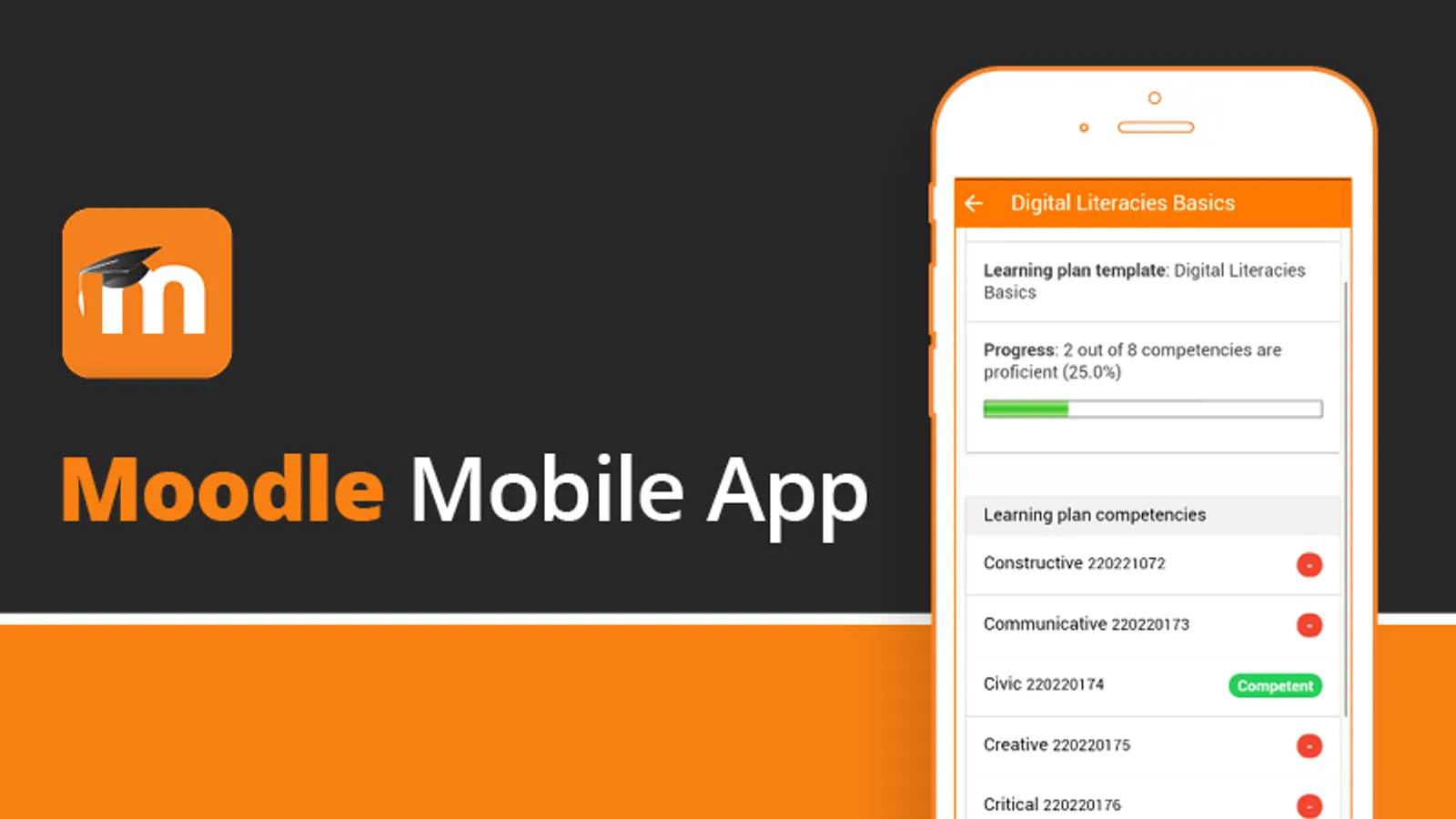
Custom Moodle App: When Does the Investment Pay Off?
A custom app icon won't pay the bills. Learn the payback calculation, hidden app store costs, and when to stick with the official Moodle app.
Upgrading Moodle 4.5 to 5: A Real-World Checklist
Moodle 5.3 LTS is out, and 4.5 loses security in October 2027. Database, /public folder, plugins, and rollback: practical roadblocks to your upgrade.

Moodle Concurrent Users: Your Server's Real Capacity
Enrolled doesn't mean concurrent. Discover the calculations, metrics, and load testing methods to reveal your Moodle's true capacity before online exams.