How Much Does iOS & Android App Development Cost in 2026?
Real-world pricing, factors that increase app costs, new Apple and Google policies for 2026, and annual maintenance budget.
by Cleverson Gouvêa
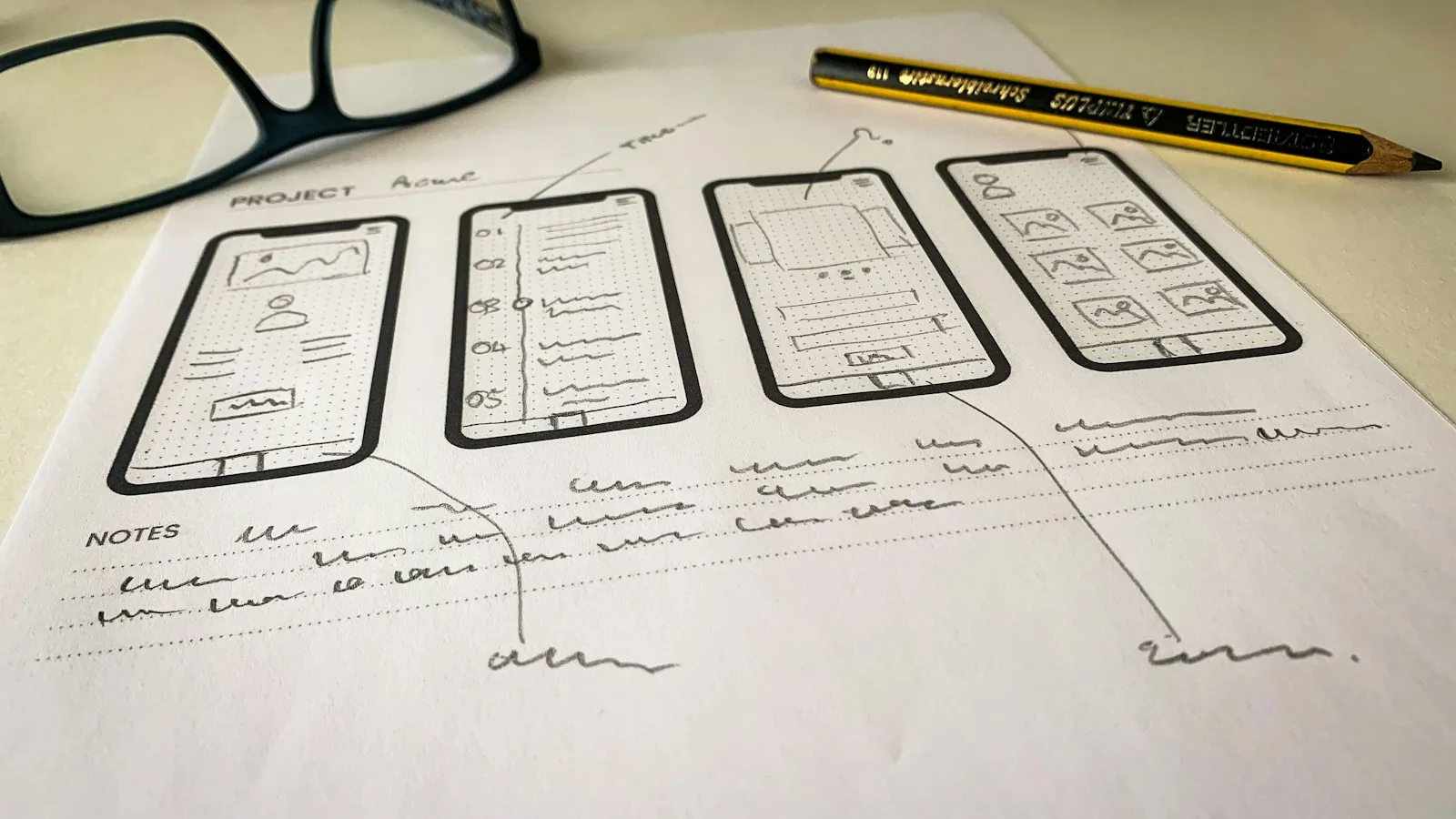
How much does it cost to develop an app in 2026? A robust iOS and Android app, complete with an admin panel and integrations, typically falls between $50,000 and $150,000 for most projects we quote in the US market. But that's just the initial figure. Let's explore what's included in each price tier, what drives up costs, what app stores charge in 2026, and how much to set aside for annual maintenance.
TL;DR
- If you're wondering about the cost of developing a business app with user login, an administrative panel, and one or two integrations, the realistic range in the US typically falls between $75,000 and $175,000, with 8 to 16 weeks until publication.
- What increases costs most isn't the number of screens: it's third-party system integration, offline mode, payment processing, and the unseen back-end.
- App stores cost little to enter ($99 per year on Apple, $25 one-time on Google), but 2026 brought new rules: Android developer verification starting 09/30/2026, target API 36, and new Apple commissions in Brazil.
- Budget 15% to 25% of the project value per year for maintenance. An app without annual updates ceases to be publishable.
- Not every company needs an app. If the use is internal and sporadic, a responsive web system solves the problem for much less.
I'm writing this as a full-stack developer and founder of Agathas Web. I publish apps in the stores on behalf of clients—ranging from custom Moodle applications for educational institutions to team apps like YESHUA—and manage the servers that power them. The figures presented are based on real project estimates.
App Development Costs in 2026: Realistic Price Ranges
There's no fixed price list for custom app development. Instead, the cost is determined by a simple formula: estimated hours × team's hourly rate. This principle applies to any calculation of app development costs. What varies between quotes is the number of hours the project scope demands and the expertise of the team involved.
The table below uses the estimated hours I apply in app development quotes, along with two reference hourly rates: $80/hour (for a lean team) and $200/hour (for a team including architecture, QA, and contractual support). These rates are consistent with our guide on custom software development costs, allowing for a direct comparison between app and web system pricing.
| App Size | Features | Hours | At $80/hr | At $200/hr |
|---|---|---|---|---|
| Content or Catalog App | Simple login, data viewing screens, push notifications, no integrations | 200–350 | $16k – $28k | $40k – $70k |
| Standard Business App | Login, access profiles, admin panel, 1–2 integrations, push notifications | 350–700 | $28k – $56k | $70k – $140k |
| Transactional App | Payment processing, scheduling or ordering, offline mode, multiple integrations | 700–1.200 | $56k – $96k | $140k – $240k |
| Platform (app + web + public API) | Multi-user, reporting, high availability, enhanced data privacy compliance | 1.200+ | $96k+ | $240k+ |
The $75,000 to $175,000 range I mentioned earlier broadly covers the 'Standard Business App' tier in the table—which is where most managers who inquire about developing an app for their company typically fall.
Why $8,000 Quotes Exist
Because someone quoted app development costs by only pricing the front-end screens. The app might appear complete, but it lacks a back-end, admin panel, data backup, or even a store account registered under your company's name. Always request a detailed list of what is not included; that's often where the critical differences lie.
Before You Get a Quote: Do You Really Need an App?
Before asking about the cost of developing an app for your business, determine if your problem truly requires one.
When an App Makes Sense
- Recurrent Use. Your customer or employee opens it multiple times a week. An icon on the home screen has value.
- Push notifications are central to the product. This includes class reminders, order alerts, or calendar notifications. For instance, in our custom Moodle application, branded push notifications are a key reason for the app's existence.
- Device Features. Using the camera for document scanning, GPS for field teams, biometrics, or offline functionality.
- Brand Presence in Stores. If your audience searches for your company in app stores, they need to find you.
When NOT to Develop an App
- Internal System Used on a Computer. For finance, inventory, or CRM. A responsive web system runs on mobile and costs significantly less.
- Sporadic Use. Nobody installs an app to open it only a couple of times a year. In such cases, a PWA (Progressive Web App—a website that installs as a shortcut and works partially offline) is a better solution.
- Idea Validation. If you're unsure whether your audience wants the service, validate it with a web-based solution first. Investing in an app store presence before achieving traction means incurring maintenance costs for something that might not succeed.
This initial assessment is a standard part of our diagnostic process, conducted before any formal quote.
Native, React Native, or Flutter: How Technology Impacts Your Budget
When calculating app development costs, the chosen technology can be as significant as the project scope. For managers unsure of the best path, the decision often comes down to one key question: how many codebases are you prepared to maintain?
| Approach | How it Works | Cost Impact | When to Use |
|---|---|---|---|
| Native (Swift + Kotlin) | Separate apps for iOS and Android | Nearly double the hours and requires two distinct teams | Apps requiring highly specific device features, games, or hardware integration |
| Cross-Platform (React Native or Flutter) | One codebase generates both apps | Significant savings over native; one team | Most business applications |
| Hybrid (Capacitor/Ionic) | A web system wrapped as an app | Most cost-effective if a web system already exists | Apps mirroring an existing web system |
| PWA (Progressive Web App) | Installable website, no app store submission | No app store fees or review process | Internal use, idea validation, tight budget |
For business applications, I recommend a cross-platform approach in most cases. React Native pairs well with a Next.js web panel, allowing for efficient reuse of personnel and logic. Flutter excels when a highly customized visual design is paramount. Steer clear of obscure tools that only a single freelancer understands; if they become unavailable, your next vendor will likely charge you to rewrite the entire application.
Hidden Costs: What Makes an App Expensive (Beyond the Screen)
When clients ask about app development costs, their minds often go straight to the visible screens. However, the real investment lies elsewhere. These are the factors that most significantly impact the budget, listed in order of influence:
- Back-end and Administrative Panel. The app itself is merely the storefront; the server, API, and the administrative panel—where your team manages data, approvals, and monitoring—are the true engine. In many projects, the back-end development consumes more hours than the app's front-end.
- Third-Party System Integration. This includes connecting with ERPs, payment gateways, the WhatsApp API, or academic systems. Each integration is essentially a contract you didn't write. Poor documentation from the third party can significantly increase development hours on your end.
- Offline Mode. Saving data on the device and synchronizing it later, while resolving conflicts, is one of the most labor-intensive items in any project. Only request this if your team genuinely needs to work without an internet connection.
- In-App Payments. This involves app store rules, anti-fraud measures, refunds, and reconciliation. Review the section on commissions before making a decision.
- Data Privacy and Security. Handling sensitive data—such as health, financial, or minor's information—demands robust encryption, a clear audit trail, and a publicly available privacy policy to comply with regulations like HIPAA or CCPA.
- Custom Design. Valuable when the app IS the product; rarely necessary for internal tools.
- Tight Deadlines. Attempting to compress a project timeline doesn't reduce the total hours required. Instead, it often necessitates adding more personnel, and onboarding new team members incurs additional coordination costs.
AI can reduce hours on repetitive tasks—such as data entry, testing, and documentation—but not on complex integrations or core business logic. I cover this in more detail in our guide on enterprise app development with AI.
App Stores in 2026: Fees, Commissions, and New Policies
In the app development cost spreadsheet, app store fees are a small initial expense but can become costly if rules are ignored. 2026 brought significant changes, and managers need to understand at least the basics.
Publication Costs
- Apple Developer Program: $99 per year, charged in local currency where available, according to the official program page. If the annual fee expires, the app is removed from the store.
- Google Play Console: A one-time fee of $25 for the developer account.
- A company account requires an EIN (Employer Identification Number) and, for Apple, a D-U-N-S number. Publishing under the client's business registration—rather than the vendor's—ensures that you retain full ownership of the app. A developer account registered in the agency's name is often a disguised form of vendor lock-in.
Android Updates
- Developer Verification starting 09/30/2026 in select markets (Brazil, Indonesia, Singapore, and Thailand). In these regions, apps installed on certified Android devices must be registered under a verified developer—including APKs distributed via direct link, outside the Play Store. According to the official Android blog, over 99% of apps published through the Play Store have already been automatically registered. However, companies distributing internal-use APKs via direct links in these countries will need to ensure compliance.
- Target API 36 required since 08/31/2026. New apps and updates must target Android 16 (API 36) to be accepted on Google Play, as per the official requirement, with a possible extension until 11/01/2026. In practice: an app without technical updates cannot even publish a bug fix.
iOS Updates
- Xcode 26 mandatory since 04/28/2026. Submissions to the App Store must be compiled with the iOS 26 SDK, as stated in the Apple announcement. Already published apps continue to function, but the next update requires the new toolchain.
- New Commissions in Brazil. Following an agreement with CADE (Brazil's antitrust regulator), Apple announced on 06/18/2026 country-specific rules for Brazil, effective with iOS 26.5. These include a 21% App Store commission (10% for Small Business Program members), an additional 5% when using Apple's payment system, 15% (or 10%) on purchases made via external website links, and a 5% commission on sales from authorized alternative app stores.
App Store Commissions: It Might Not Be Your Problem
For many businesses, app store commissions don't even factor into the total cost of app development. These fees primarily apply to digital goods and services sold within the app—such as subscriptions, courses, or credits. Apps that sell physical products or services rendered outside the app (e.g., order placement, appointment scheduling, shipping) are typically not subject to these store charges. Similarly, free business apps that only provide access to existing clients also avoid these fees. In the context of online education (EAD), our most common model involves selling courses directly on a website using credit card or other online payment methods, then granting access within the app after payment.
Maintenance: The Hidden Cost Often Missing from Proposals
Here's the most candid part of the answer regarding app development costs in 2026: an app is never truly "finished." Apple mandates new Xcode versions, and Google requires new target APIs annually. A stagnant app quickly becomes an app that cannot even receive critical security updates.
How Much to Budget
Budget 15% to 25% of the initial project value annually. For an app costing $100,000, this translates to $15,000 to $25,000 per year. Anyone calculating app development costs without accounting for this line item is only seeing half the picture. This budget covers:
- SDK and library updates to comply with evolving app store requirements.
- Bug fixes that only surface with real users on untested devices.
- Server, database, backup, and monitoring for the back-end. An app without a robust server infrastructure is merely an attractive icon that fails to launch.
- Apple Developer Program account renewal and minor enhancements driven by real-world user feedback.
The Invisible Cost of Server Infrastructure
Businesses accustomed to web systems often underestimate this aspect when estimating app development and ongoing hosting costs. An API running on an inexpensive shared server might function adequately until the first push notification goes out to all users—at which point thousands of devices could hit it simultaneously. I manage Moodle servers that experience peak loads on exam days, and the lesson holds true for apps: always size your infrastructure for peak demand, not just average usage. I've detailed these infrastructure considerations in our guide on Moodle hosting costs in 2026.
How to Get an Accurate Quote: 8 Questions to Ask Your Vendor
You don't need to understand code to determine the true cost of app development and compare proposals effectively. You just need to ask the right questions and demand written answers.
- Will the app be published under my company's developer account? If not, you don't own the app.
- Will the source code reside in my company's repository from day one? A common red flag is "we'll deliver it at the end," which often translates to "we'll deliver it once you've paid for maintenance."
- Are the back-end and administrative panel included? Many low-cost proposals only quote the app's front-end.
- What technology will be used, and why? A valuable answer addresses your specific business problem, not just the latest trend.
- Who will host the API, and what are the monthly costs? This figure must be explicitly stated in the proposal.
- What is explicitly excluded from the scope?
- What is the proposed maintenance plan, and what does it cover? Annual SDK updates should be explicitly included.
- How will I track progress? Live demos every one to two weeks are the minimum expectation.
With these eight answers, the question of app development cost moves beyond generic estimates to a precise figure tailored to your specific project.
How Agathas Web Addresses These Challenges
At Agathas Web's custom development division, the answer to app development costs comes with a detailed written scope. We treat mobile apps as an integral part of a larger solution, encompassing web systems, APIs, and integrations—because, in practice, these components are interdependent. Specifically, here's what we deliver:
- Free 1-hour Diagnostic Session. We take the time to understand your specific challenges, and we'll even advise you if a web system is a better fit than a mobile app. A detailed proposal is provided within 5 business days.
- Discovery Before Code. Wireframes, architecture, and MVP (Minimum Viable Product) are approved by you before a single line of code is written.
- Apps in React Native, Flutter, or Native, chosen based on your specific problem. Publication to app stores under your company's name, with push notifications and offline mode where appropriate.
- Back-end, Admin Panel, and Integrations handled by a single team: This includes REST APIs, payment gateways like Stripe and PayPal, ERP systems, Moodle, and the official WhatsApp API—which we manage daily for clients using Voyia.
- 1-to-2-week Sprints with Live Demos, source code committed to your GitHub or GitLab repository from day one, and infrastructure deployed to your own accounts. Zero vendor lock-in.
- Optional Monthly Support, covering annual SDK updates for app store requirements, bug fixes, and monitoring. If you prefer to internalize maintenance, the code will be delivered with comprehensive documentation.
As a reference for app development costs with us: mobile apps are typically published within 8 to 16 weeks, with integrated applications generally falling within the $75,000 to $175,000 range, finalized after a diagnostic session. To get started, simply request a diagnostic through our app and system development page or contact our team via WhatsApp.
Conclusion: The Right Price Solves the Right Problem
The cost of developing an app depends less on the number of screens and more on three critical decisions: whether an app is truly necessary for your needs, how many codebases you're prepared to maintain, and the extent of back-end development included in the proposal. Factor in annual app store requirements and an ongoing maintenance budget of 15% to 25% per year.
If your next step is to transform an idea into a concrete scope and budget, begin with Agathas Web's free diagnostic session for custom software development. You'll leave the conversation with a clear understanding of whether you need an app, a web system, or both—and the associated costs for each approach.
Related posts
Protecting Your Web Server from Attacks: WAF, fail2ban, and Rate Limiting
94% of logins on the Cloudflare network are bots. Learn how WAF, rate limiting, and fail2ban block attacks before they take down your site.
Linux Server Hardening: Checklist for Web Servers
Is your website running on your own VPS with no dedicated sysadmin? This checklist covers the hardening steps we apply to every inherited server, including common pitfalls that can lock you out.
Native, Hybrid, or PWA: Choosing the Best App for Your Business in 2026
Cost, performance, app stores, iPhone push notifications, and offline capabilities: a comparison to help you avoid overspending on your next app.