Premiere Technology: The 2026 World Cup Streaming
Why "premiere technology" trended on Google Trends ahead of the 2026 World Cup — and what 4K streaming and low latency teach your business.
by Cleverson Gouvêa
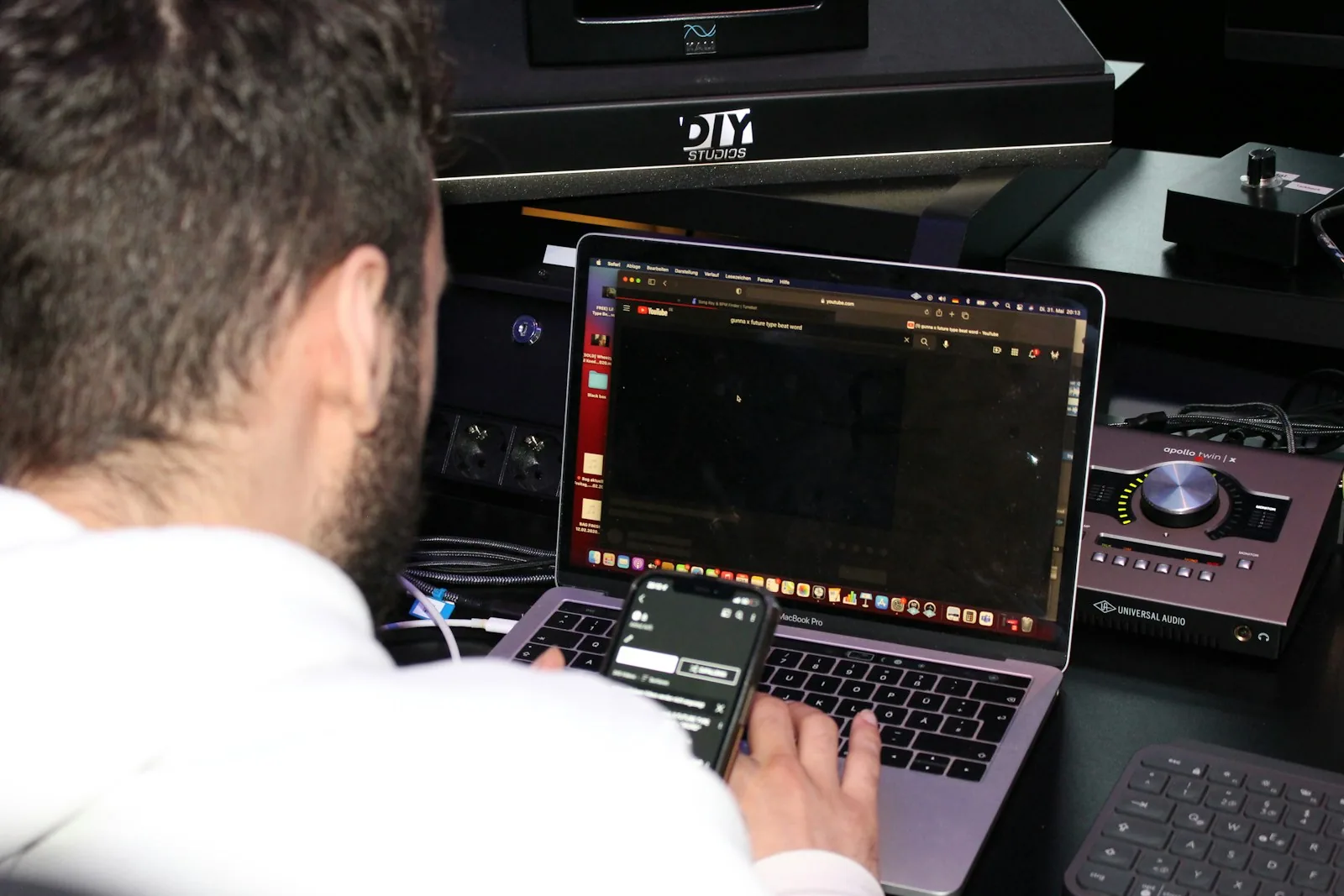
Premiere technology became a hot topic on Google Trends ahead of the 2026 FIFA World Cup, and for good reason: Globo promised its most advanced broadcast ever — low latency on Globoplay, dozens of games in 4K on SporTV, and the debut of a native digital platform, GE TV. In this guide, I break down what actually changes on screen and, more importantly, what your company can learn from the tech race behind it.
TL;DR
- The search for premiere technology exploded because the 2026 World Cup (starting June 11) is the biggest live streaming test ever in Brazil.
- Globo distributes matches across broadcast TV, SporTV, Premiere, Globoplay, and the new GE TV; CazéTV streams all 104 matches on YouTube, some in 4K.
- The three technical bets: low latency (syncing streaming with TV), 4K (55 games on SporTV), and native digital platforms.
- The lesson for businesses isn't about soccer: it's about handling traffic spikes, responding in real time, and capturing an entire audience's attention simultaneously.
- Well-segmented paid traffic, WhatsApp via official API, and automation are the business equivalent of the infrastructure Globo is building.
What "premiere technology" means and why it's trending
The phrase premiere technology brings together two worlds that collided in June 2026. "Premiere" is Globo's pay-per-view soccer service, now delivered via streaming and a central part of the World Cup broadcast package. "Technology" comes in because, to handle 104 matches with 48 teams, the broadcaster had to overhaul how the signal reaches your screen.
The search trigger is simple: the 2026 World Cup — hosted by the United States, Mexico, and Canada — started on June 11 and is the largest edition ever. When millions of Brazilians try to watch the same game at the same time on phones, smart TVs, and browsers, the conversation shifts from who's commentating to engineering: latency, resolution, codecs, and server capacity.
That's why "premiere technology" isn't a passing curiosity. It's a thermometer of how the Brazilian public perceives live streaming — and how much technical quality has become a deciding factor, not a detail.
The technical shift of the 2026 World Cup on screens
The 2026 World Cup broadcast in Brazil is more fragmented than ever. Instead of a single path, fans choose between broadcast TV, pay TV, and streaming — each with a different technical proposition. According to Canaltech, there are up to 17 combinations of time and platform to follow the matches in the country.
Premiere fits into this mosaic as the service that historically delivers multiple simultaneous games to subscribers. The novelty in 2026 is that streaming is no longer the "plan B" of TV: it has taken on technical prominence, with Globo promising image quality and synchronization that previously only satellite transmission could guarantee.
| Platform | Type | Matches | Technical Highlight |
|---|---|---|---|
| TV Globo | Broadcast TV | Selection of main matches | National open signal |
| SporTV | Pay TV | 55 | Signal in 4K |
| Premiere / Globoplay | Streaming (subscription) | Broad coverage | Focus on low latency |
| GE TV | Native digital streaming | 32 | Platform built for digital |
| CazéTV (YouTube) | Free streaming | 104 | Broadcasts in 4K |
| SBT / N Sports | Open / closed | 32 | Complementary distribution |
The technical reading of this table is clear: there is no longer a single "main screen." There is a mesh of platforms competing for lower latency, higher resolution, and fewer glitches. And that's where the discussion about premiere technology gets interesting for anyone working with digital products.
Low latency: the problem streaming is finally solving
If you've ever celebrated a goal and heard your neighbor shout 30 seconds earlier, you've experienced the villain of live streaming: latency. It's the delay between what happens on the field and what appears on your screen.
In traditional HLS (HTTP Live Streaming)-based streaming, this delay typically ranges from 15 to 30 seconds. The video is cut into small fragments, packaged, distributed via a CDN (content delivery network), and reassembled on your device — each step costing seconds.
How low latency works
Low-latency protocols, such as LL-HLS (Low-Latency HLS), tackle this accumulation. They break the video into even smaller pieces and deliver them partially, before the fragment is even complete. In practice, the delay drops to around 2 to 5 seconds — close enough to TV so that no one ruins your goal.
For the 2026 World Cup, Globo announced the adoption of low latency on Globoplay, according to IT Forum. The stated goal is to bring streaming closer to the linear broadcast experience, eliminating spoilers from neighbors and social media.
Why this matters beyond soccer
Low latency is not a sports whim. It's the same engineering that supports sales livestreams, online auctions, live classes, and real-time customer service. When delay drops, interaction increases: the audience comments, reacts, and buys at the right moment, not 30 seconds later. This principle applies to any business that depends on real time.
4K, multi-screen, and platform fragmentation
The second front of premiere technology is resolution. SporTV confirmed 55 matches with 4K signal, and CazéTV offers 4K broadcasts on YouTube. Four times more pixels than Full HD means sharper images — but also much heavier files to transmit without buffering.
Delivering 4K nationwide requires efficient codecs (like HEVC/H.265), robust CDNs, and an adaptive bitrate system: video quality automatically adjusts up or down based on your connection. That's why the same game can look crystal clear on your home fiber and pixelated on 4G in a crowded stadium.
Fragmentation is also strategic. By spreading matches across Premiere, Globoplay, GE TV, SporTV, and partners, Globo distributes the load — no single platform has to handle the entire audience of a final. It's the broadcasting version of a principle every developer knows: you don't scale a spike by putting everything on one server.
What Premiere's infrastructure teaches about real time
Here's the part that matters to those running a digital business. Behind the phrase premiere technology lies a manual of engineering best practices that apply far beyond sports. After 15 years building critical environments — from EAD to systems that can't go down — I see three direct lessons:
- Plan for the peak, not the average. The audience of a final doesn't arrive smoothly; it shows up all at once. Systems that scale only for daily averages collapse at the most important moment.
- Distribute the load. Just as matches are split across platforms, your application gains resilience with CDN, cache (e.g., Redis), and multiple instances. A single point of failure is a single point of defeat.
- Real time is a competitive advantage. Those who respond instantly — whether video or service — capture attention before it escapes elsewhere.
These are not abstractions. They are architectural decisions that separate a site that withstands a viral campaign from one that returns error 502 just when traffic arrives.
How Brazilian companies can ride the World Cup wave
The World Cup concentrates the entire country's attention for nearly a month. For sellers, it's a rare window: the audience is online, engaged, and at predictable times. The question isn't whether you should take advantage, but how to do it without improvisation. Some concrete paths:
- Paid traffic aligned with the match schedule. Schedule campaigns for peak attention times and segment by sports interest. Cost per click tends to fluctuate during these peaks, so monitor closely and adjust bids instead of "letting it run."
- Customer service that handles the flood. If the campaign works, messages pour in. Answering from a personal number doesn't scale — and risks getting blocked. Migrating to the official WhatsApp API ensures segmented broadcasts and multiple agents without fear of taking down the number.
- Automation and AI for first contact. An AI agent answering initial questions 24/7 prevents leads from cooling while your team sleeps. It's worth reviewing what AI already delivers for businesses in 2026 before defining the flow.
- Infrastructure tested before the game, not during. Run load tests, validate cache, and confirm that hosting can handle projected traffic. The peak doesn't announce its arrival.
The common thread is the same as premiere technology: having the right content isn't enough; you need the technical plumbing to deliver it at the exact moment the audience is watching.
Common pitfalls when scaling for traffic spikes
Not everyone who tries to ride the wave makes it to shore. The most common failures I've seen in seasonal campaigns:
- Relying on a personal WhatsApp number. Mass broadcasting from a regular chip is a recipe for getting blocked at the worst time. It's worth understanding how to avoid blocking your business number before hitting send.
- Forgetting mobile. Most people will watch and buy on their phones. A slow page or a checkout that freezes on 4G kills the conversion that the campaign paid to win.
- Not measuring. Without event and conversion tracking, you only find out what worked after the money is gone. Set up measurement before the first ad runs.
- Underdimensioning the server. Saving on infrastructure only to crash at the peak is the most expensive mistake — the traffic you don't serve goes to your competitor.
Conclusion: The World Cup ends, the engineering stays
The search for premiere technology will cool down when the World Cup ends, but what it reveals remains: live streaming is now a high-demand engineering problem, and those who master latency, scale, and real time come out ahead. For a broadcaster, that means low latency and 4K. For your business, it means a site that doesn't crash, service that doesn't freeze, and campaigns that appear at the right time.
If your company wants to turn the attention of the World Cup — or any seasonal spike — into real results, the path starts with the technical foundation. At Agathas Web, we work exactly at this intersection of traffic, service automation, and infrastructure that can take the heat. It's worth starting by reviewing where your funnel loses people when traffic grows.
Related posts

Cobuccio Tecnologia: Why Companies Are Building In-House IT
A $200,000 data processor in Monte Belo, Brazil, helps explain the most expensive IT decision a Brazilian company will make in 2026.
The Other Microsoft Founder: Paul Allen and the 1975 Legacy
Paul Allen spotted the Popular Electronics cover, named Micro-soft, and left in 1983. The full story behind the question.

Primi Tecnologia: Tracking Products Against Counterfeiting
Counterfeiting drained $85 billion from the US economy in 2025. The physical seal is only a third of the solution—the rest is serialized codes, APIs, and logs.